
Story by Emmy Benton
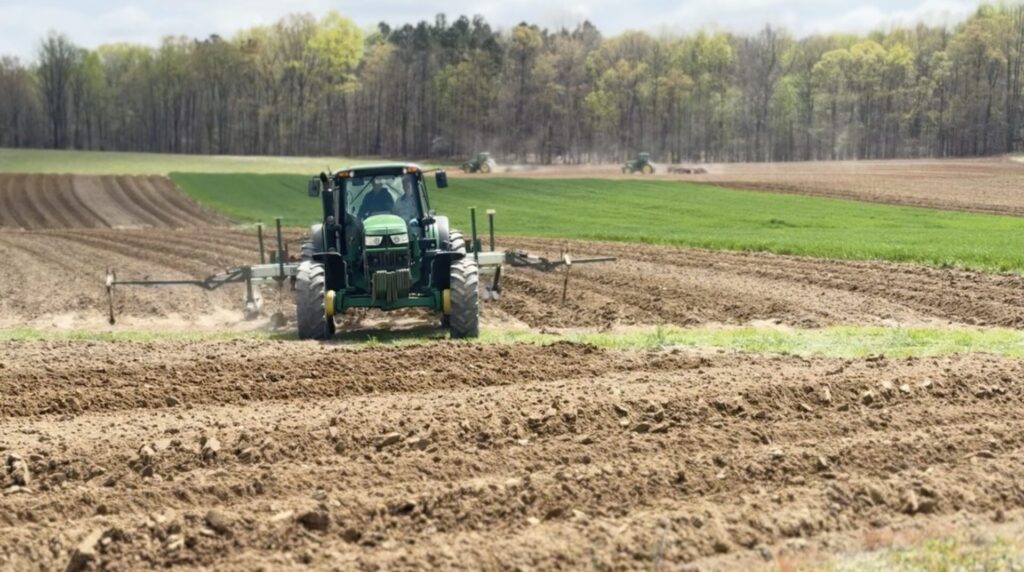
Bryce Berryhill understands tobacco farming. His family has been doing it for generations in
Person County, North Carolina and it just makes sense to him. What Berryhill says he doesn’t
understand, though, is how his livelihood will be affected by the development of AI datacenters
nearby.
“My life is built on agriculture,” Berryhill said. “Personally, I don’t know what I’d do without it
at this point.”
Berryhill’s 300 acres of farmland and the surrounding area could soon be threatened by facilities
that house IT infrastructure designed to power, train and run AI programming. In 2024,
Microsoft acquired a 1,350-acre property in Person County, North Carolina, and as of April
2026, they were in the planning phase of the project.
“Investing in cloud infrastructure in North Carolina supports long-term digital growth and helps
ensure that essential online services remain reliable and accessible,” reads Microsoft’s website
regarding the Person County site. Microsoft was unavailable for an interview with UNC Media
Hub.
To address community members’ concerns about the high water usage of data centers, Microsoft
has said the Person County site will use air-cooled chillers with a recirculating water loop. This
is instead of traditional methods that typically use open-loop evaporative cooling systems,
continuously drawing water from the ground and putting more strain on municipal water
supplies.
Berryhill is concerned about the data center’s water usage because tobacco is a water-intensive
crop. His fields already put some strain on the community’s water supply, so he wonders what
further stress could do to those resources.
Microsoft said water rates won’t increase for Person County residents because the company will
pay for the infrastructure needed to support the data center. However, data centers that use less
water typically require more energy to run, highlighting the need for an expansion of energy
sources to reduce stress on local power grids.
This problem isn’t confined to rural North Carolina. Urban and suburban areas are also seeing AI
data centers attempt to take up residence.
A 12-month moratorium on data centers in Apex, North Carolina, about an hour south of Person
County, was put in place in April 2026 after a proposed data center project in New Hill, North
Carolina generated strong opposition. With the temporary ban, Apex is unable to review or
approve applications for the development of data centers until April 27, 2027.
Apex’s Environmental Advisory Board was tasked with researching data center development and
proposing Unified Development Ordinance amendments that pertain to the regulations
surrounding land use, zoning and development.
“I’ve been in office now for seven years and I’ve never seen the community come together on one
topic and item of concern as this,” Apex mayor Jacques Gilbert said.
The Protect Wake County Coalition was formed in mid-August 2025 by residents of New Hill
who opposed the development of the data center in their neighborhood. Michelle Hofner
O’Connor, one of the co-founders of PWCC, is especially concerned about the impact of data
centers on people’s health.
“I am concerned our state is unwilling to impose strict regulations and that North Carolinians are
going to feel the real impact of it,” O’Connor said. “Not just with their wallets and the cost of
their electricity bills, but exposure to major pollutants and toxins that will potentially change the
day-to-day course of their lives.”
Gilbert said that his constituents have additional concerns, such as the energy that would be
drawn from a data center of that magnitude, how drinking water levels would be affected and the
noise from generators that could hinder quality of life for those living closest to the site.
O’Connor said she believes research is key to understanding the multifaceted nature of what
building data centers means for communities.
“The group really focused on the message of responsible growth,” O’Connor said. “The proposal
submitted to the town of Apex was similar to many of those submitted around the U.S. for
hyperscale data centers: irresponsible and seeking to take advantage of council members’ lack of
knowledge.”
The opposition in Apex has been seen across North Carolina as well. In an Elon University poll
from March 2026, 44% of North Carolinians opposed data centers in their communities. A
follow-up poll in July 2026 found that objections grew to 53%. Support for data centers dropped
from 24% to 20% between March and July, and the percentage of those unsure of their stance
dropped from 32% to 27%, presumably moving into the opposition category, Jason Husser,
director of the poll, said.
Husser said that the opposition has been seen from various demographics and backgrounds,
adding to the increasing complexity of the issue.
This local opposition translates to a growing trend of national resistance against the construction
of data centers. A Gallup survey done in March 2026 found that seven in 10 Americans oppose
constructing a data center in their local area, including 48% who are strongly opposed and 23%
who are somewhat opposed.
In an April 2026 web survey, Gallup asked an open-ended question about people’s reasons for
favoring or opposing data center construction in their communities. Those in favor named
potential economic benefits as their reason, and those who opposed data centers said they were
mostly apprehensive because of the potential environmental concerns.
Gallup found that most Americans appear to be adopting a “not in my backyard” attitude, where
they fight against projects built near their homes. Husser believes this is what’s happening in
North Carolina, especially because of the resource usage and environmental concerns.
“I do think, over time, we will see data centers become controversial,” Husser said. “Not simply
because of resource utilization, but of a much deeper worry about the role of AI on the economy,
particularly in job loss and loss of things that, in the past, were uniquely human skills.”
Berryhill hopes that having a data center in his backyard won’t alter his livelihood too much. He
believes it will, no doubt, change the view from his fields forever — whether he’s ready or not.
“Most of that land you look at was prime farmland,” Berryhill said. “Once it’s gone, it’s gone.”