
Story by Mercer Meadows
It’s a late summer Saturday and the smells of fried fair food and sounds of a barbaric cryptid creature fill the air. Crowds of people slide past one another in the streets, moving between tents with homemade soaps, hot kettle corn and samples of Bigfoot prints. On center stage stories of Bigfoot encounters were being shared by 7-year-old witnesses in between older men in camo playing Bigfoot sounds over the microphone.
In the western part of the state, thousands of folks flooded the streets of Marion, North Carolina, on Aug. 20, 2026, to celebrate the annual Bigfoot Festival. Festivities include a 5k through downtown Marion, food trucks, local artists and vendors, live music, face painting and Sasquatch souvenirs at every turn. Whether you’re a Bigfoot believer looking for new evidence and sightings to take you deeper, or you’re a tuckered-out mom trying to get her kids out of the house on a summer Saturday, the Bigfoot Festival has something for everyone to enjoy.
John Bruner, the festival organizer and a McDowell County native, came up with the idea for an event after a reported Bigfoot sighting around Lake James, NC in 2017. Within the last 50 years, North Carolina has reported 100 Bigfoot sightings, with a large concentration of those sightings in the western part of the state, near Lake James and Marion. Bruner has been researching the cryptid creature for over 40 years and runs a nonprofit research team called Bigfoot911. The team conducts expeditions to investigate sightings by using night vision gear, trail cameras and audio recording devices.
Christian MacLeod, director of the American Cryptid and Paranormal Society, better known as “the Cryptid Guy,” says that out of all the Bigfoot events and festivals he visits, Marion does the best job. MacLeod has over 25 years of experience researching and tracking Bigfoot and other paranormal activity. MacLeod attributes the event’s success to the careful work of Bruner in selecting expert speakers and organizing fun activities for everyone. “I think these festivals are more fun than anything,” MacLeod says.
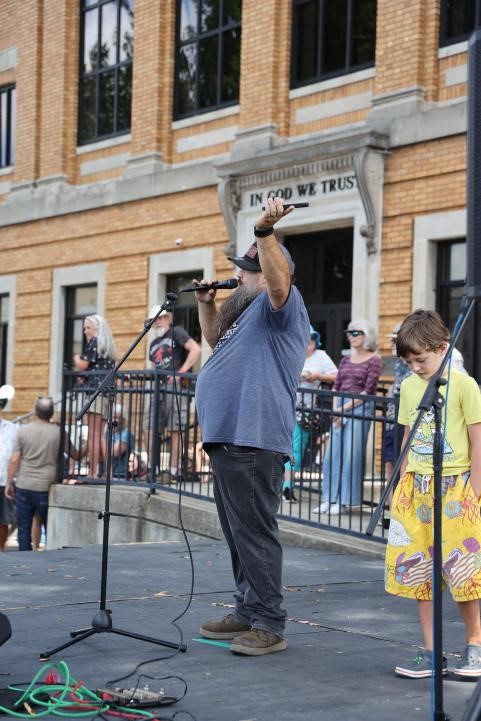
The festival’s slogan is “come a skeptic, leave a believer.” Bruner ensures that both the skeptic and the believer have something to engage with at the festival. For the believers, the day entails visiting booths stacked with proof, pictures and books, staffed by leading experts and field investigators. Both community members and visitors from over 20 states come to share their close encounters and hear the latest in the field of crypted research.
For the skeptic, the event means fun crafts for the kids, Bigfoot-themed brews for the adults, and five blocks of vendors and shops to explore. Emily Davis said she traveled to the festival from Asheville “to have fun, get out of the house, and see people,” and denies any possibility of believing in the star of the festival.
It’s important to understand the backdrop for why this small-town festival is such a hit. Just 36 miles east of Asheville, Marion was once a major hub for textiles and furniture factories. Textile companies shaped the local economy and infrastructure for nearly 100 years. Now Marion finds itself in a time of transition, like many other southern mill towns. What used to be a cotton mill has turned into hip new retail stores, specialty coffee shops and microbreweries.
The first festival in 2018 brought in close to 20,000 visitors. Eight years later, the event has grown to bring in anywhere from 40,000-50,000 attendees. But the tourists don’t come emptied handed––they also bring the cash with them when they visit. The Bigfoot festival helps bolster revenue for the small town, bringing in hundreds of thousands of dollars. Some shops reach their peak annual sales for the entire year on Bigfoot Day and rely on the festival to meet their bottom line.
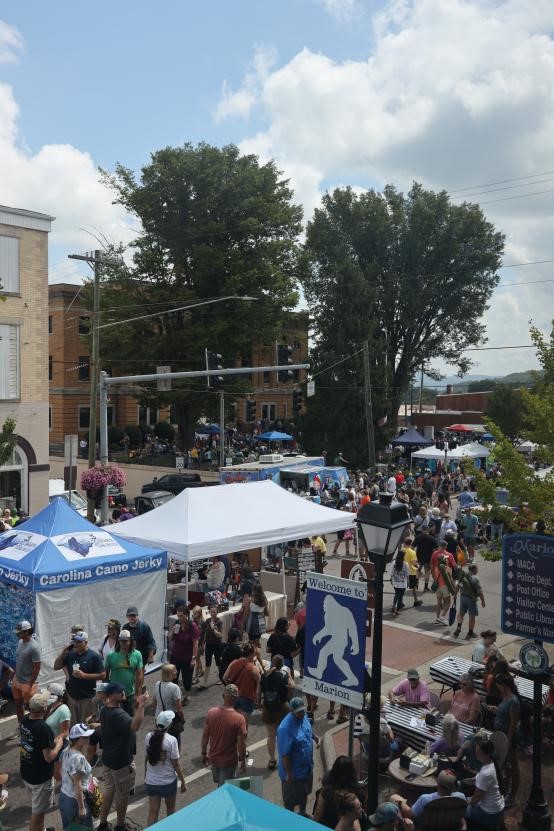
Clinton Baughcum from Franklin County, Georgia, said he traveled to Marion to visit his family that lives in the area and came to the festival to support his father-in-law, who is certain Bigfoot exists. Baughcum shot down the idea of becoming a believer at the festival but said, “It’s great to see all the small businesses come together with the community.”
Marion isn’t the only small town that relies on just one day to generate annual revenue. Small towns across the state host yearly festivals that bring in thousands of people to experience local celebrations, food and traditions. The Folk Fest in Greensboro; the Taylorsville Apple Festival ; and Mayberry Days Festival in Mount Airy are just a few of the unique festivals that have put some North Carolina small towns on the map.
While creative events display the unique character of small towns and allow visitors and locals to celebrate what makes each community unique, they also drive the local economies. When people travel to a different community for a festival they spend money going out to eat, staying at hotels or homes, and shopping at small businesses. They increase the cash flow and this money circulates in the local economy long after the festival ends.
According to MBA students at the UNC Greensboro Bryan School of Business and Economics, the Folk Fest generates $9.93 million for the local economy in one weekend. Visitors spent between $58 and $73 at local shops, restaurants, and other businesses. 25% of visitors traveled more than 30 miles, increasing hotel stays to more than 1,500 rooms. Grocery spending nearly doubled, and retail and service businesses experienced a 35% increase in sales.
Taylorsville, home to just 11,000 residents, brings in close to 35,000 Apple Festival attendees every October. The festival hosts over 400 booths, three stages of live music, and craft contests and activities for kids. The festival is registered as a non-profit and donated all $76,000 in revenue to the local school system. According to AlexanderCountyOnline.com the money raised at these events doesn’t just benefit the vendors or the people performing on the stage–– but is circulated back into public schools and improving the educational environment across Taylorsville.
Over 30,000 tourists visit Mount Airy in late September to celebrate Mayberry Days, a weeklong family celebration and commemoration of the values and small-town quirks displayed in The Andy Griffith Show. The star of the show, Andy Griffith, was born and raised in Mount Airy, and the town makes a killing stepping back in time for a week to celebrate the show and its impact on the small town. The Surry Arts Council reports a revenue of $6 million annually from the festival.
Walking through the crowded streets of Marion, seeing local artists share their craft and store owners with lines out the door, it’s clear why so many people travel to this tiny mountain town. The idea of whether or not you genuinely believe in Bigfoot fades into the distance, as the presence of the community’s character comes into focus.
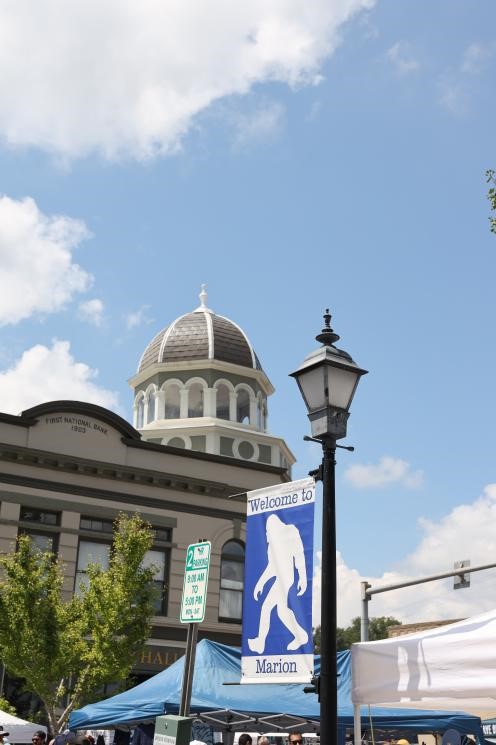
Michael Cook, author of The Bigfoot, with 23 years of experience researching cryptozoology, says that his mission isn’t to get people to necessarily believe in the existence of mythological creatures, but that the search for something rare offers benefits outside of Bigfoot research. “It’s not even a thing of getting them to believe, it’s taking these things away [holding up his phone] from them and getting them outside,” Cook says.
This isn’t a story about a small group of crazy people who believe a mythological creature roams around in the woods at night, and if they’re crazy or not, we don’t get to decide, but this is a story about community. About individuals experiencing the uniqueness and character of a community through the lens of whatever food, art, or jewelry the vendors have to offer.
By the end of the day, the only furry creatures around were family dogs, and the spectacle expected at first glance never quite materialized. What did emerge, however, was a glimpse into how individuals fit into their communities and the good that can come from simply gathering. In an age where millions of people can be connected through a single app and a single screen, that sense of connection doesn’t require a hunt through the woods— just venturing downtown.
What looked strange from the outside with dirt prints and creepy creature sounds, was, up close, just another Saturday in a small town—people finding a reason to show up and be together.
Marion’s Bigfoot festival offered plenty of oddities, but its real story was much more ordinary: Families wandering between food trucks, kids begging for Bigfoot Tracks ice cream, and vendors talking with customers about what inspires their art. There was no evidence of a creature lurking in the woods, but there was plenty of evidence of something easier to find: a community that delights in showcasing their unique character and feels connected by continuing to show up.
“It’s not just looking for Bigfoot,” Cook says. “It’s looking for yourself in all of this.”