
Story by Ellie Kollme
Beekeeping is a complex hobby, one that thousands of people across North Carolina participate in. The North Carolina State Beekeepers Association, founded in 1917, is the largest state beekeeping association in the United States. Within the Triangle, the Orange County Beekeepers Association meets once a month, bringing beekeepers together to exchange ideas and techniques to perfect this intricate craft.
Within beekeeping, there are various areas of focus, including queen reproduction, honey production, woodworking, swarm control and more. The hobby is so complex that there is no single “right” way to do it, and each beekeeper has their own tips and tricks that make them successful. Phil Crump, a member of the Orange County Beekeepers Association, said everyone has different methods depending on their goals.
“There’s 80 million ways to do it, and there’s no wrong way,” Crump said. “So what suits your purpose and your desires is what it counts to.”
Lisa Vogel, also a member of the Orange County Beekeepers Association, said it is a difficult hobby that takes a long time to understand. She has been beekeeping for 10 years.
“A beekeeper told me one time, you’re a beginner for the first 20 years because you haven’t seen everything,” Vogel said.

Full captions
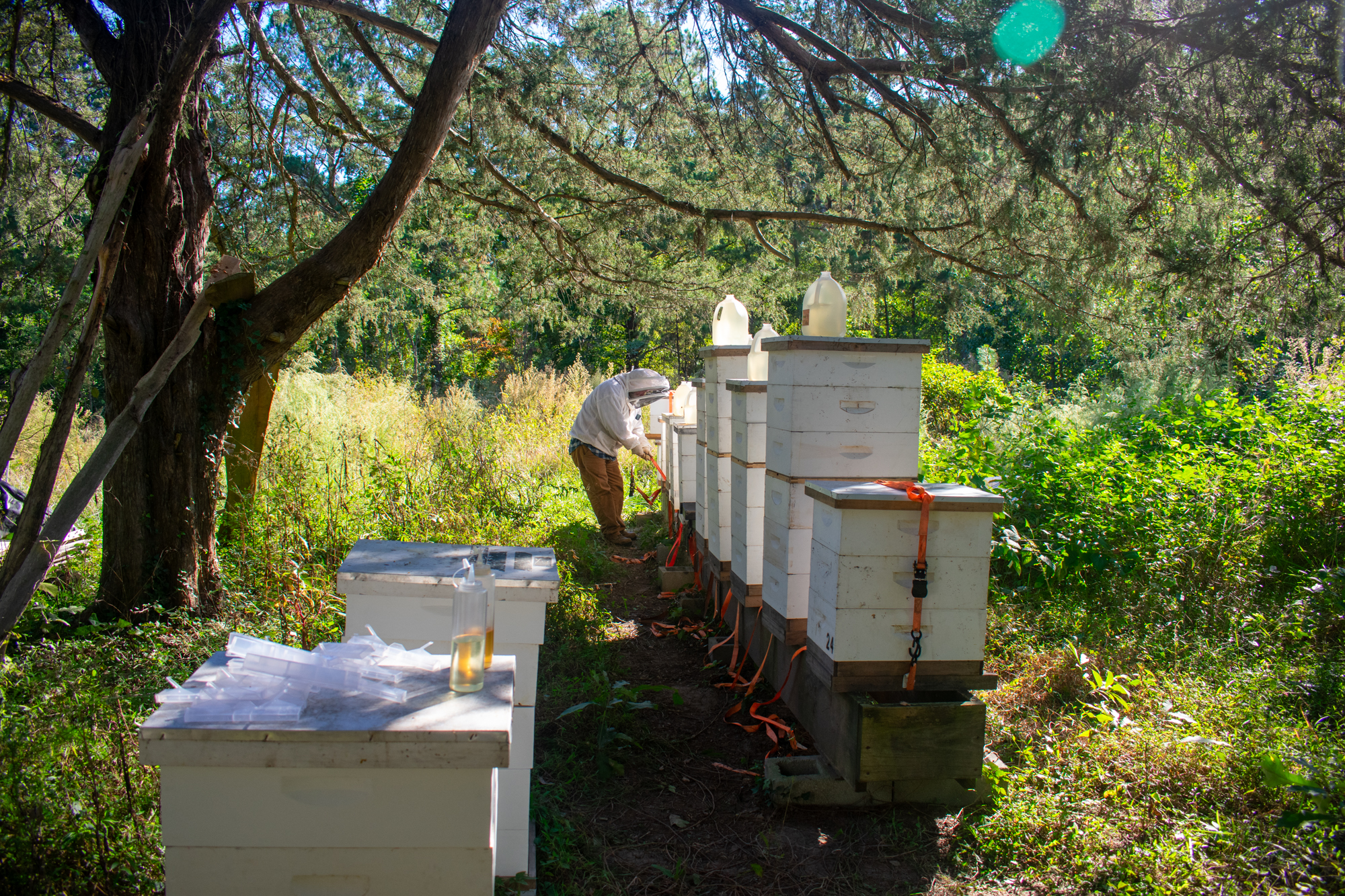
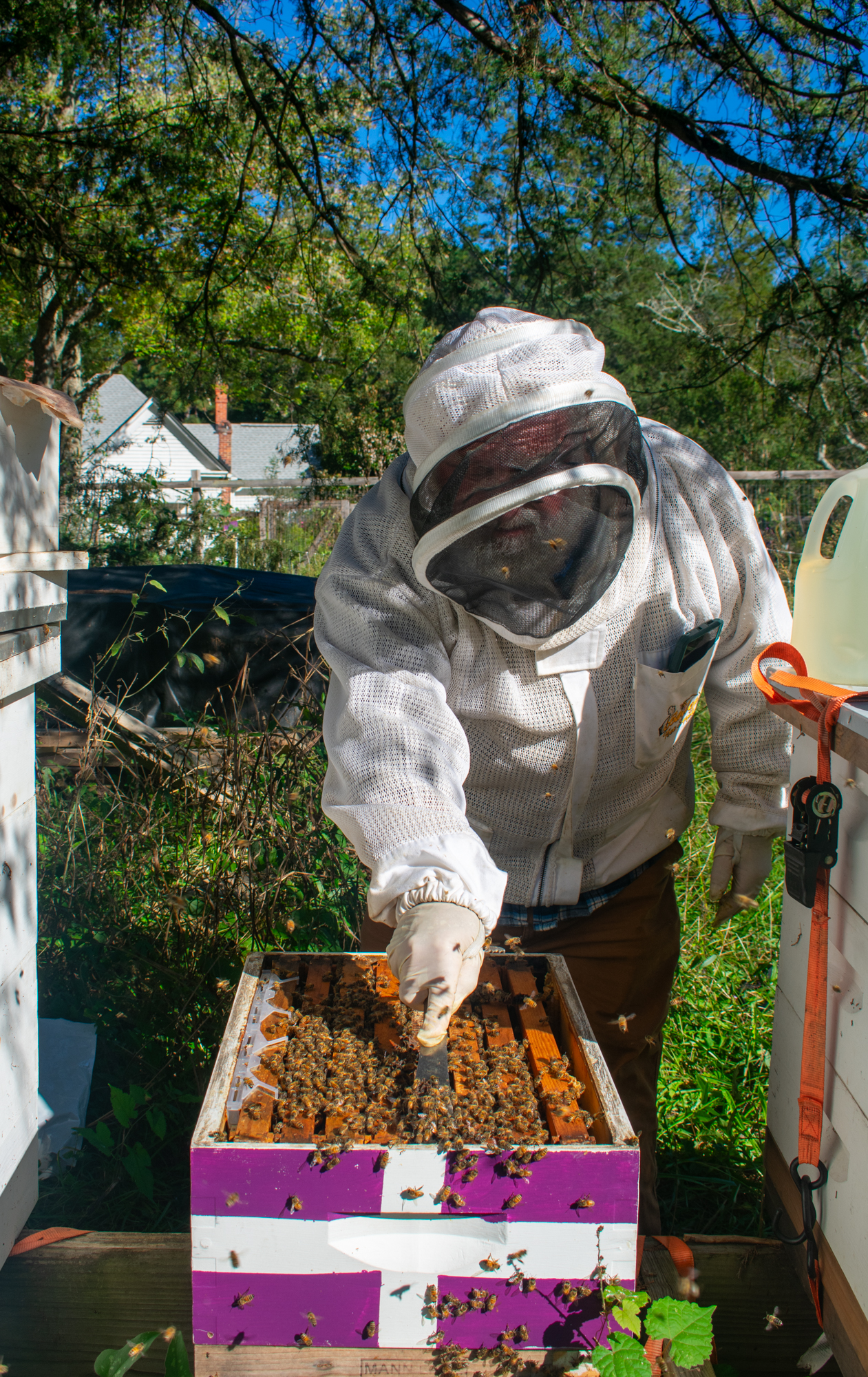
1. Crump, a member of the Orange County Beekeepers Association, checks his box hives in Durham, North Carolina, one out of 75 hives he maintains across Hillsborough, Johnson, Wake, Durham, Orange, Chatham and Alamance counties. Now 72 years old, Crump has been in and out of beekeeping since the 1980s.
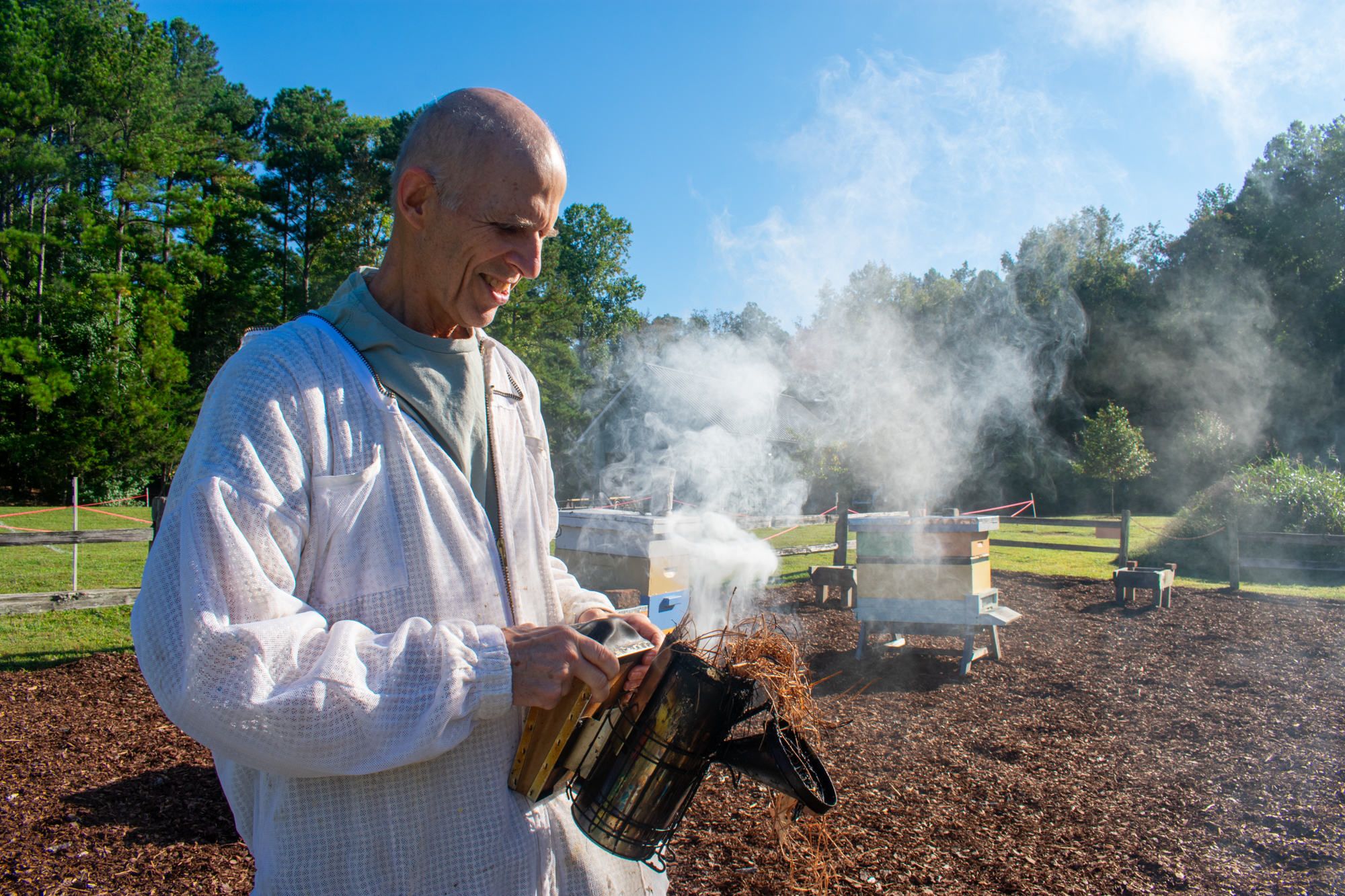
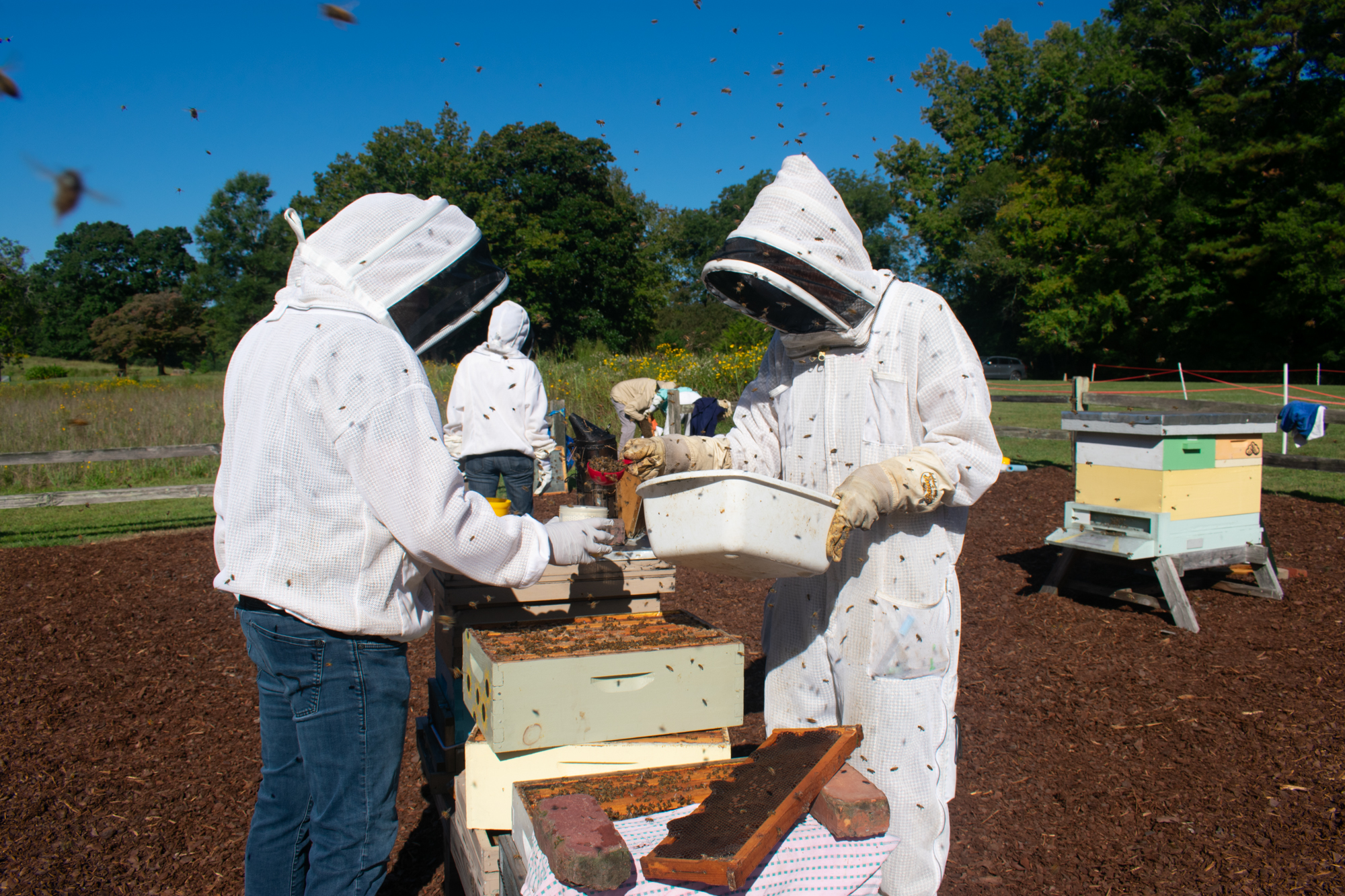
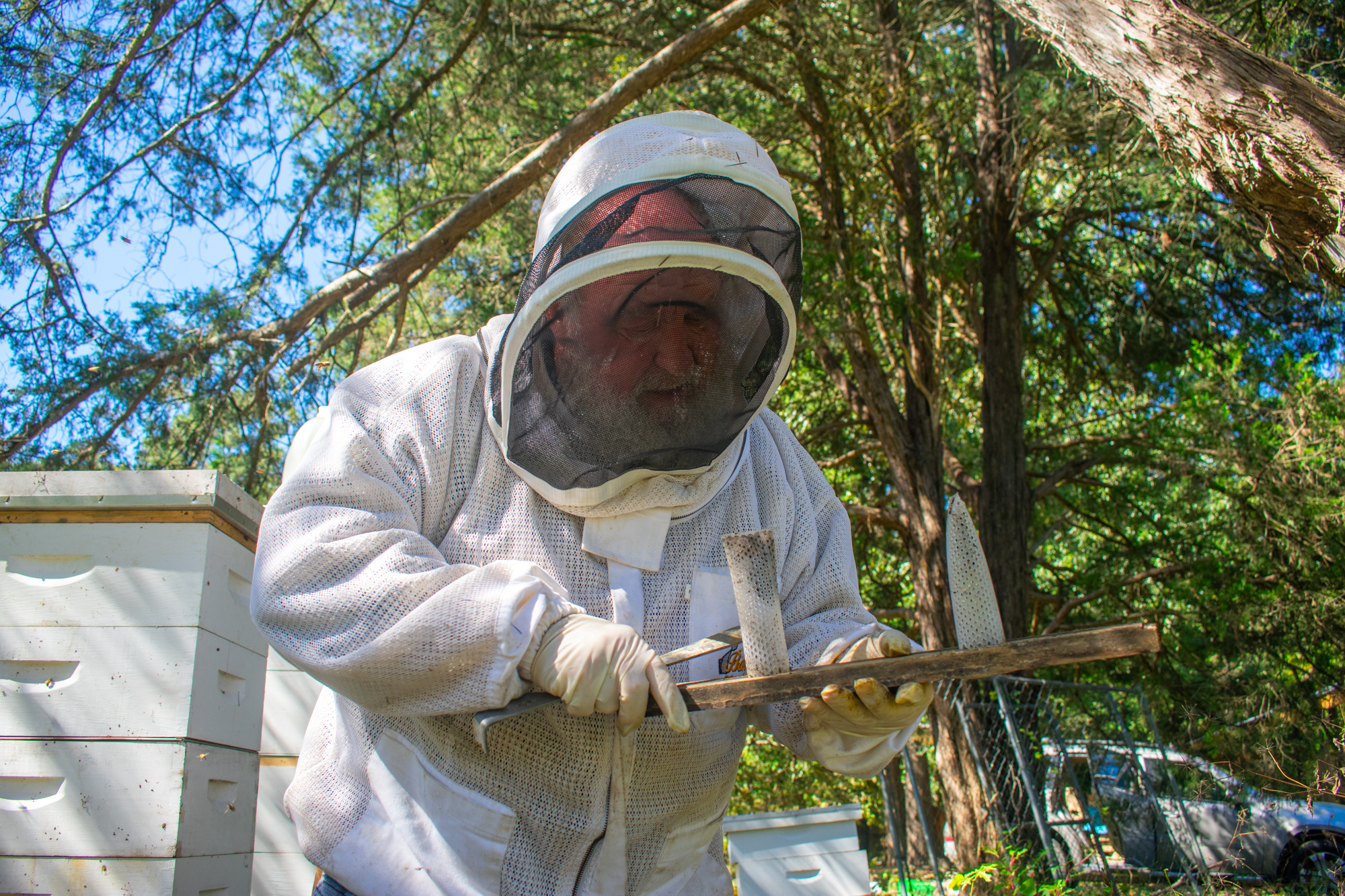
2. Brad Kosiba, beekeeper based in Hillsborough and a member of the OCBA, prepares to smoke a box hive by burning pine straw inside a fire chamber and puffing it repeatedly to catch a flame at Blackwood Farm Park in Orange County. He has been beekeeping for 14 years and currently manages five hives.
Kosiba gently smokes the bees by placing smoke at the entrance and the top of the hive before opening it to calm them down. He said the smoke disrupts the bees’ alarm pheromone and defense response when they perceive their nest is being invaded, which results in less stinging behavior. He lets the smoke sit for one to two minutes, being careful not to overdo it, as too much smoke can harm the bees.
“There are times I can go into a beehive and not use smoke,” Kosiba said. “The only times are when I’m doing little work, I’m just going to feed them or something like that, I can be gentle enough. But if you’re going to do much of anything, you’re gonna need to distract them.”
3. The beekeepers prepare to inspect the box hive by smoking it at Blackwood Farm Park. Kosiba said there are community events at Blackwood where everyone can come and help. Although beekeeping can be a solitary pursuit, he said community events are fun and that learning from fellow beekeepers is essential.
“You come out of beekeeping school thinking that you’ve learned it all, and then you get out to your bees and it’s like, they’re not doing it the way they said in the book,” Kosiba said. “There’s an old saying, ‘The bees never read the book,’ and the only way you can deal with that is with the fellow beekeepers.”
Vogel said the community of beekeepers is a quirky, generous and sometimes cantankerous group of people from all walks of life, from teachers to PhD scientists. Crump said they are “sharing people.”
“People tend to look after each other,” Crump said. “Your struggles are my struggles.”
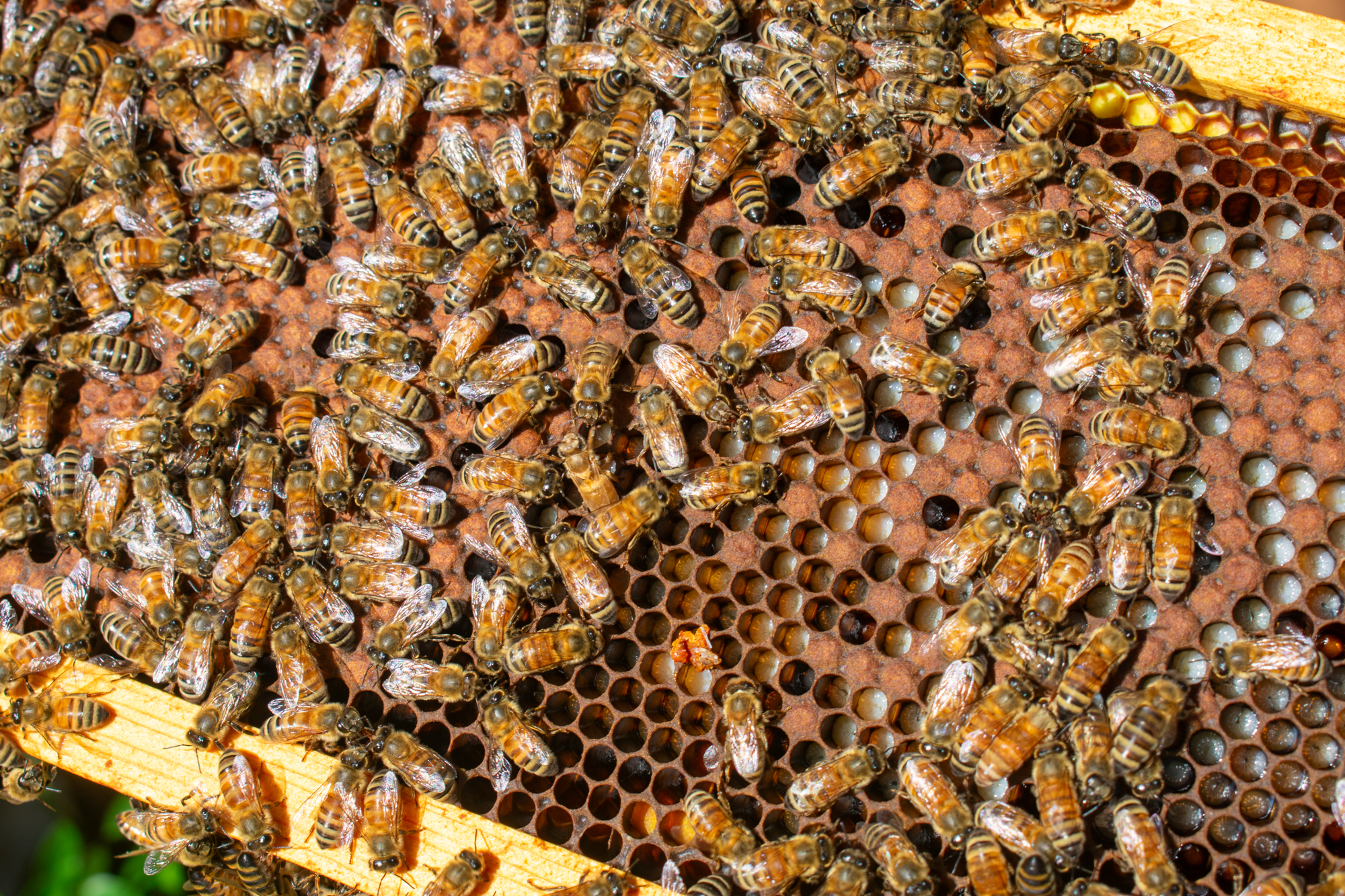
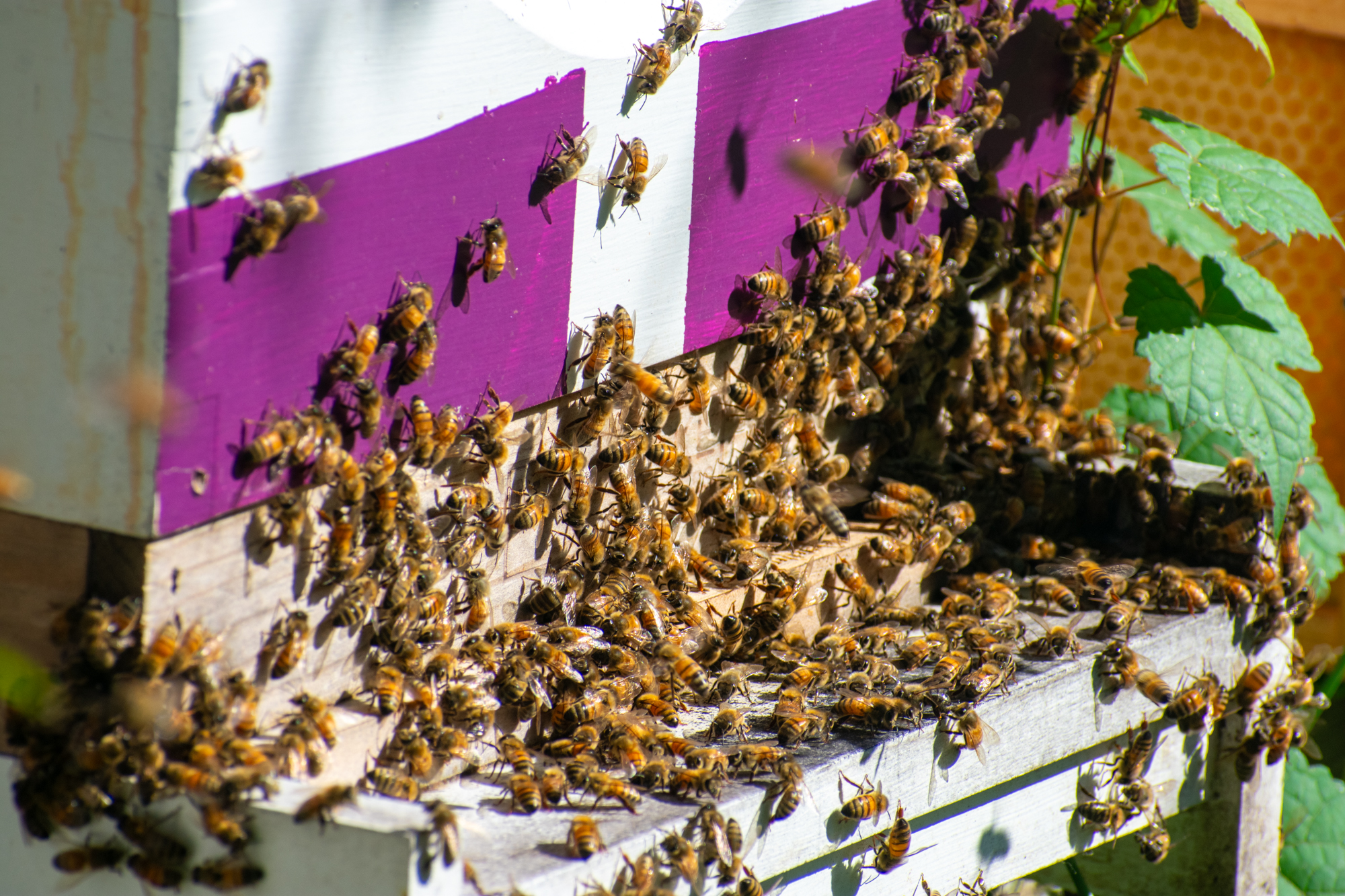
4. Bees are considered a “superorganism,” meaning the colony functions as a single entity rather than a group of individuals. Vogel said the bees know exactly what their role is in the colony and have different tasks throughout their lives.
Within the hive, there are three different types of bees: queens, drones and worker bees. There is typically only one queen, who is primarily responsible for reproduction. Drones are male bees that mate with virgin queens outside the hive, and worker bees are females who do not lay eggs under normal circumstances. Worker bees perform a variety of other tasks, such as cleaning the cells and brood and caring for the queen. Brood refers to the developing stages of bees, including eggs, larvae and pupae. The white in the cells is larvae, the darker brownish orange is capped brood, and the lighter orange is pollen, which is the source of protein for bees.
Kosiba said the system that makes a beehive thrive is remarkable.
“The bees never fail to give me challenges and problems that are hard to figure out,” Kosiba said.
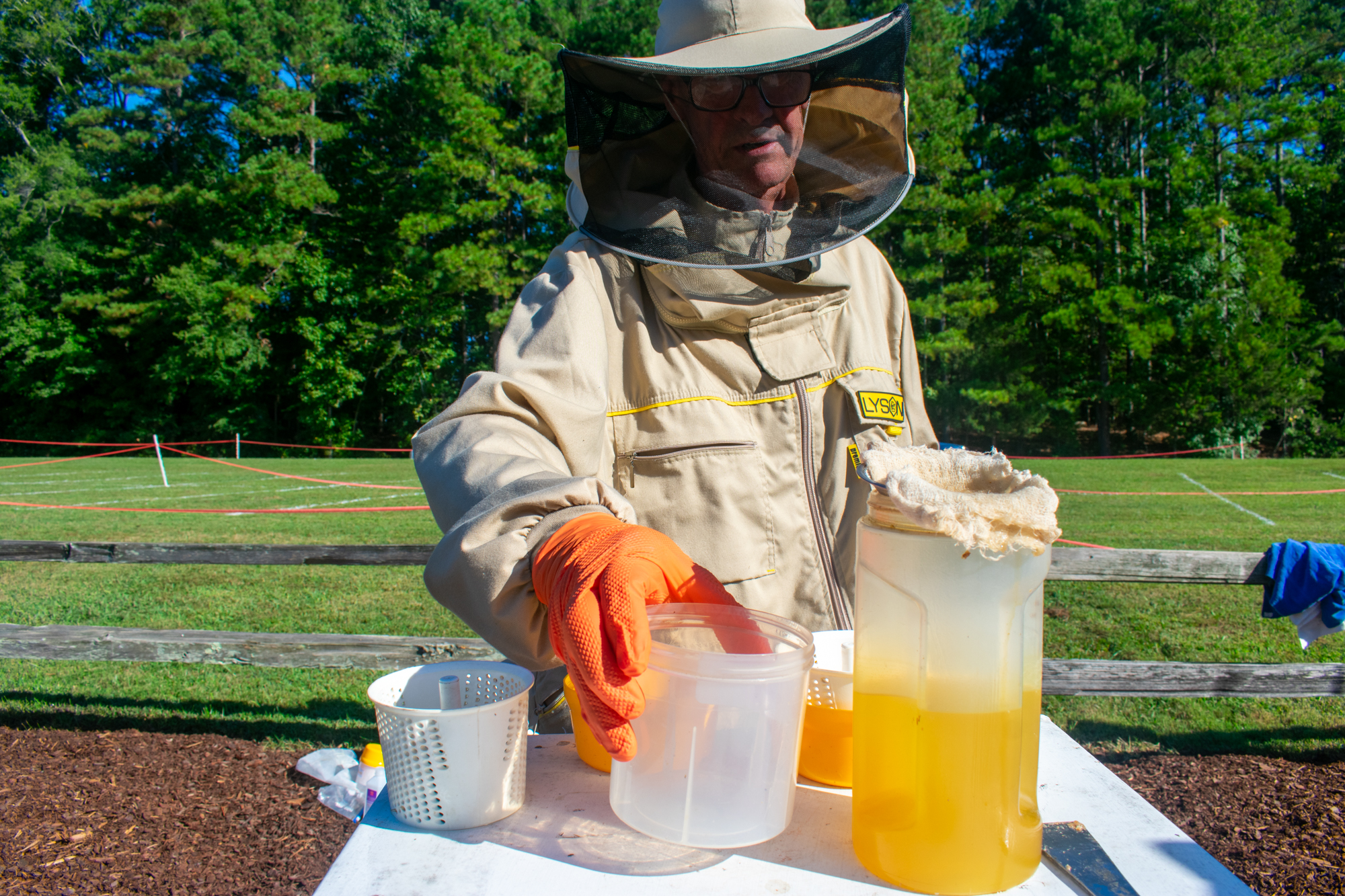
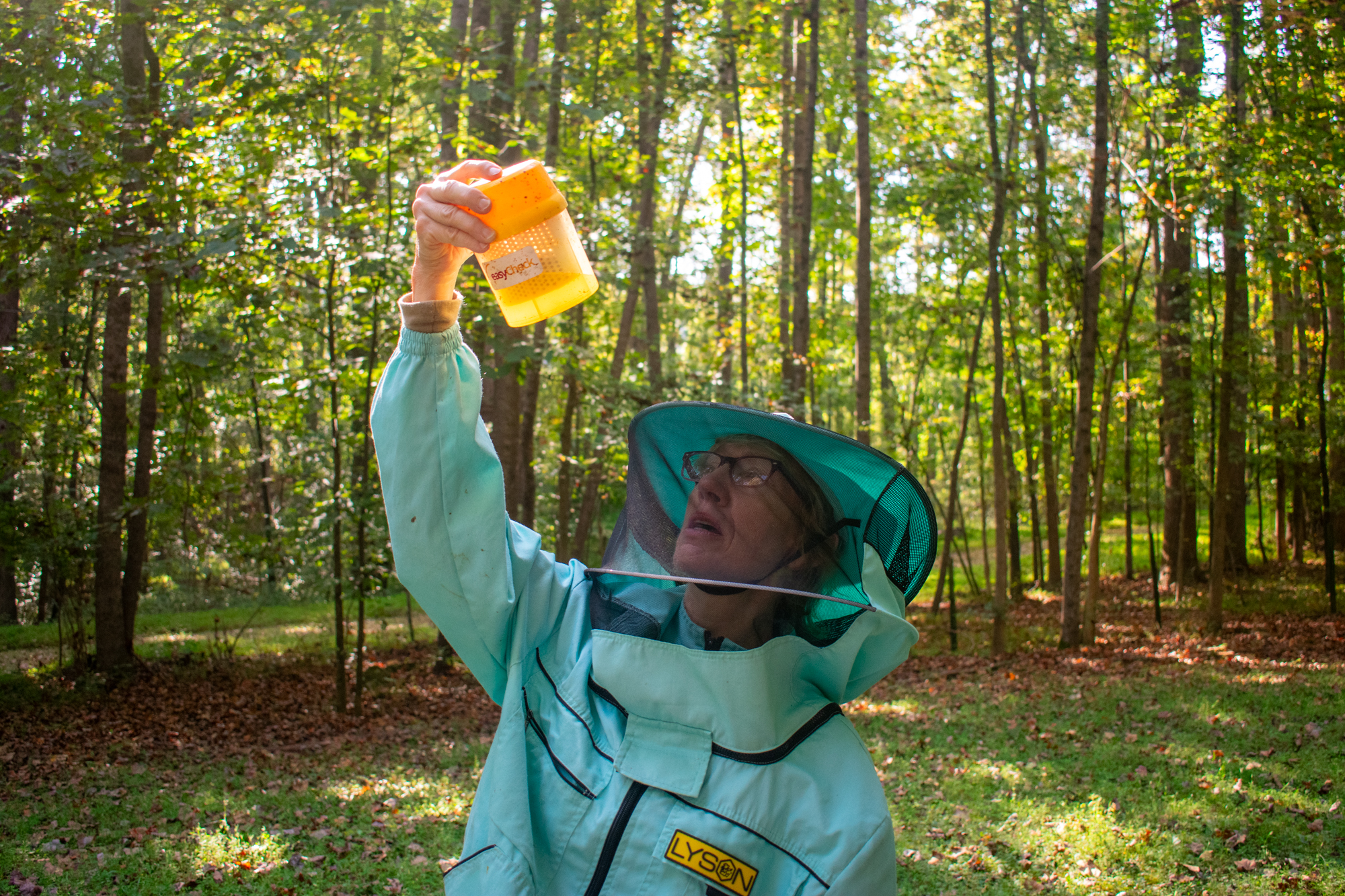
5. Andrew Ford, a member of the OCBA, creates an alcohol wash to inspect the hive for varroa mites, parasites that originated in Asia and came to the United States in the 1980s that carry harmful viruses. The viruses, including deformed wing virus, can infect bees and wipe out an entire colony if too many mites are present.
There are multiple ways to test for varroa mites, but during the alcohol wash, beekeepers take a half cup of bees, approximately 300 bees, and shake them up in a container of alcohol. The varroa mites release from the bees and fall to the bottom, where they can be counted. Based on the percentage of bees that had mites, beekeepers decide whether treatment is necessary.
Kosiba said if more than 2 percent of bees have mites, treatment should be considered, though it depends on the season.
6. Vogel checks the alcohol wash for any mites that have fallen off the bees. Vogel said she treats for mites four times a year, calling it “a big deal.” She currently has eight hives.
“The mites are the thing that probably kills bees more than anything,” she said. “If you’re intent on keeping your bees alive, you gotta check for mites.”
Treatment involves using various chemicals such as formic acid, thymol and oxalic acid. Vogel uses oxalic acid, which she vaporizes inside the hive for three minutes to kill the mites without harming the bees. Kosiba uses formic acid, which comes in a pad placed inside the bee box that releases fumes throughout the hive. He leaves the pads in the hive for two weeks, which does not affect the bees or the honey being produced.
7. Kosiba scoops bees into the container to prepare for an alcohol wash at Blackwood. He said he enjoys beekeeping because it helps him connect to nature.
“I just like being out,” he said. “I’m a strong believer in vitamin O, which is the outside. I think it’s the thing that’s missing most in the current lifestyle in America.”
He said beekeeping is pure fun.
“There’s nothing like going out to a field in Orange County at 5:30 or 6 o’clock in the morning in the summer, and being there at sunrise, the mist is rising off the field and the bees are not quite waking up,” Kosiba said. “It’s incredible.”
8. Crump cleans his hive box by scraping off propolis, a natural mixture produced by honey bees from substances collected from plants and buds. He said not all beekeepers do it, but he likes to keep his equipment clean so it lasts longer.
Crump builds his own boxes and keeps piles of wood in his grandfather’s old beekeeping shed next to his home outside of Raleigh.
Due to the complexity of beekeeping, most beginners start by attending bee school or by taking courses. Kosiba said when people first start, they often don’t know what they’re doing and are afraid of accidentally killing the bees. He said it used to take him half an hour to inspect a hive and he always feared he missed something, but now it only takes him 15 minutes.
Vogel said beekeeping is hard work and that the learning curve is long. Crump said he has seen some people become phenomenal beekeepers in “no time flat,” and that it depends on how much effort someone puts in.
9. Kosiba said one thing people tend to forget is that bees are not pets but livestock, and that they must be treated that way.
“You have to make sure they don’t get disease or they die,” he said. “You have to make sure that they’re fed or they die. It’s a very unforgiving process in many ways, but when it works, it’s really beautiful.”
Kosiba said too many people get into beekeeping because they think it’s “cute,” and that they need to be better educated. Vogel said there is a lot of romantic idealism about beekeeping and that people do not understand how hard the work can be.
“It’s a difficult hobby,” Vogel said. “There is a lot of tedium and repetition.”
10. Crump cleans out feeders that he fills with sugar water to feed bees when there isn’t enough nectar. Bees make honey from the nectar they collect from flowers, but there are times during the year when nectar is scarce, a period called the dearth according to Crump. During the dearth, some beekeepers feed them sugar water, which the bees can use to make honey. The ratio of sugar to water is either 1-to-1 or 2-to-1, depending on the season.
Kosiba calls the honey produced by sugar water “funny honey” and said the bees will always prefer real flowers. He said it’s not the kind of honey beekeepers sell but helps the bees survive through winter.
“You can feed them sugar water all you want, but if there’s enough nectar out there, they’re going to leave it in the feeder,” Kosiba said. “They’re going to say, ‘Why would I want this crap?’ It’s like the difference between a gourmet restaurant and trail food.”
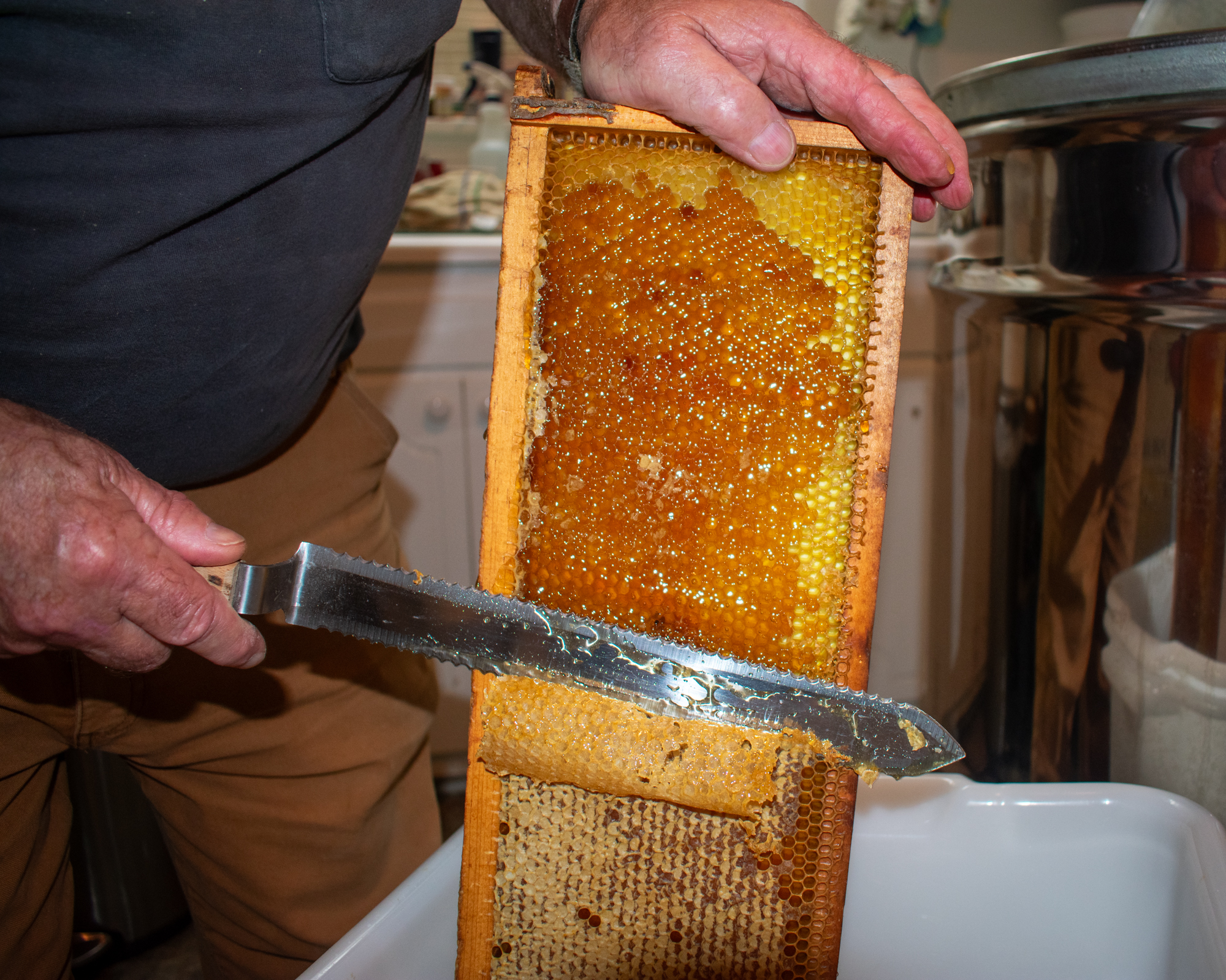
11. Crump decaps honey from his frames before extracting it. Extraction is the process of separating honey from beeswax combs to harvest it for use. Once the frames are full of honey, the bees preserve it by capping it in wax cells. To extract the honey, the caps must be removed, which Crump does with a knife. Once decapped, the frames are placed in a honey extractor, a large centrifuge that spins around and flings the honey out without damaging the honeycomb.
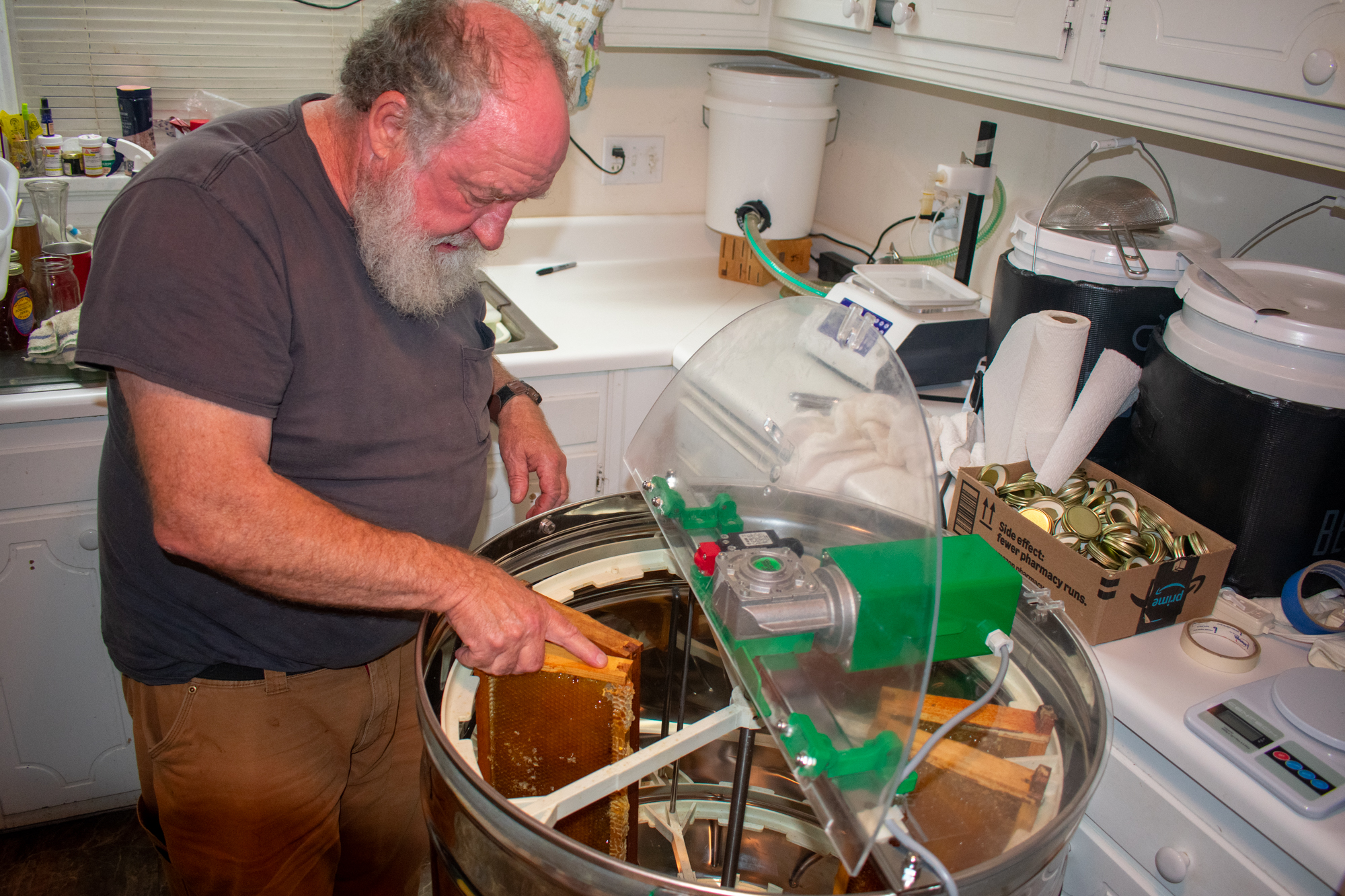
12. Crump places the frame in the honey extractor. As it spins, honey flows out of the bottom and is collected in a bucket. Once the honey is produced, Crump uses a honey-filling machine to bottle the honey.
Harvesting and extracting can be physically demanding due to the heavy weight of the honey. Crump said the biggest challenge in beekeeping is the lifting, and that many beekeepers stop with age because of the back problems it causes.
Vogel said older beekeepers will switch from a 10-frame hive box to an eight-frame, which is smaller and easier to handle. She attends weightlifting classes two or three times a week to continue beekeeping. Last year, she harvested nearly 500 pounds of honey and often calls her son for help.
“Harvesting honey is extremely heavy when you’re working by yourself and you’re lifting 50-pound boxes of a hive by yourself,” Vogel said. “You can injure yourself pretty quickly if you’re not careful.”
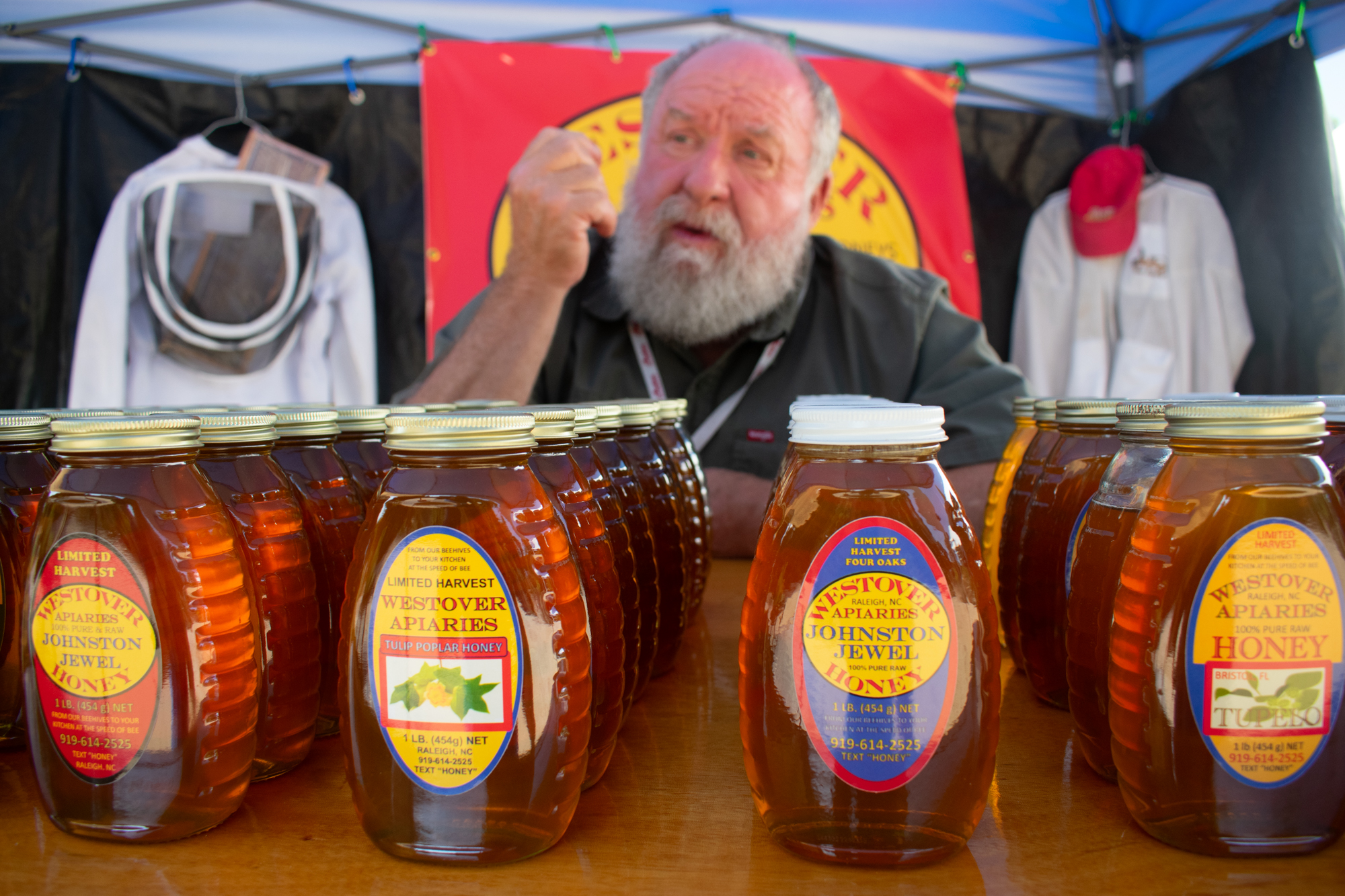
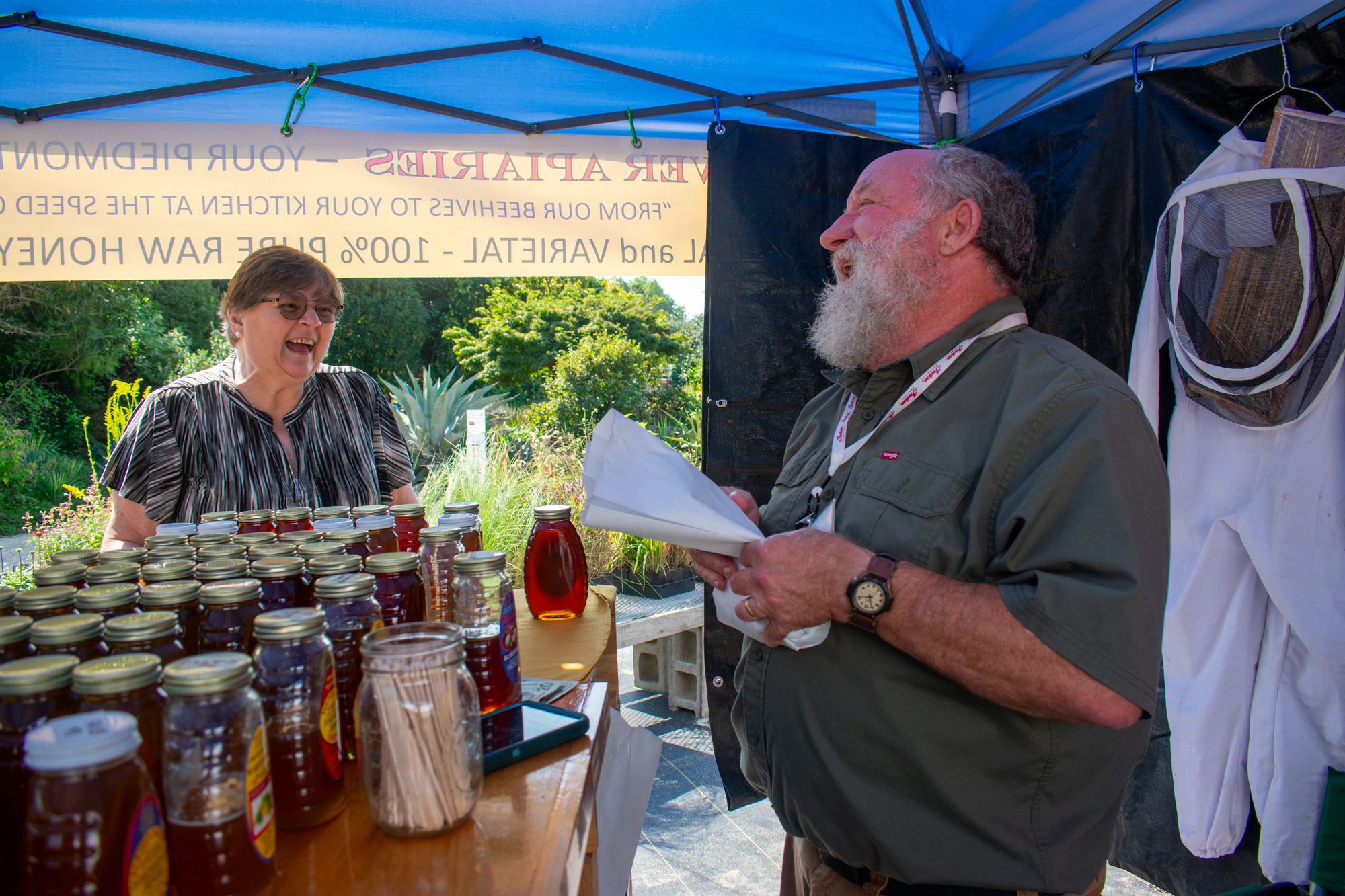
13. Crump sells his honey eight times a year at Plant Delights Nursery in Wake County. He owns Westover Apiaries and sells more than 16 different types of honey depending on the season. The types of honey produced depend on flowers’ nectar, which affects both taste and color.
He sells his honey for $30 a jar. He said most beekeepers charge $15, which undercuts those trying to make a living.
“It’s just a matter of how much people value food,” Crump said. “If you value the quality of your food, then that person is going to be more likely to be my client than somebody that’s just looking for cheap and they’re not concerned about what they eat.”
Crump said he is developing a brand and that his clients come from a wide range of demographics. Vogel called him a “salesman extraordinaire.”
14. Crump considers himself a “sideliner” beekeeper, someone who tries to make money but doesn’t do it full time. The other types of beekeepers are hobbyists, who sell to friends and family, and commercial beekeepers, who make it their full-time profession.
Kosiba sells his honey to his friends and family and often gives it as holiday gifts. Vogel said she used to sell her honey in stores around Orange County and plans to participate in a holiday market this year.
Vogel said she found her passion in beekeeping and knew she was hooked the first time she tried it.
“It was like, oh my gosh, I feel like I did this in another life or something,” Vogel said.