
Story by Daneen Khan
Riley Phillips grew up fantasizing about having a closet like the Disney Channel characters she saw on screen. Today, her collection of more than 2,000 garments would make even Hannah Montana jealous.
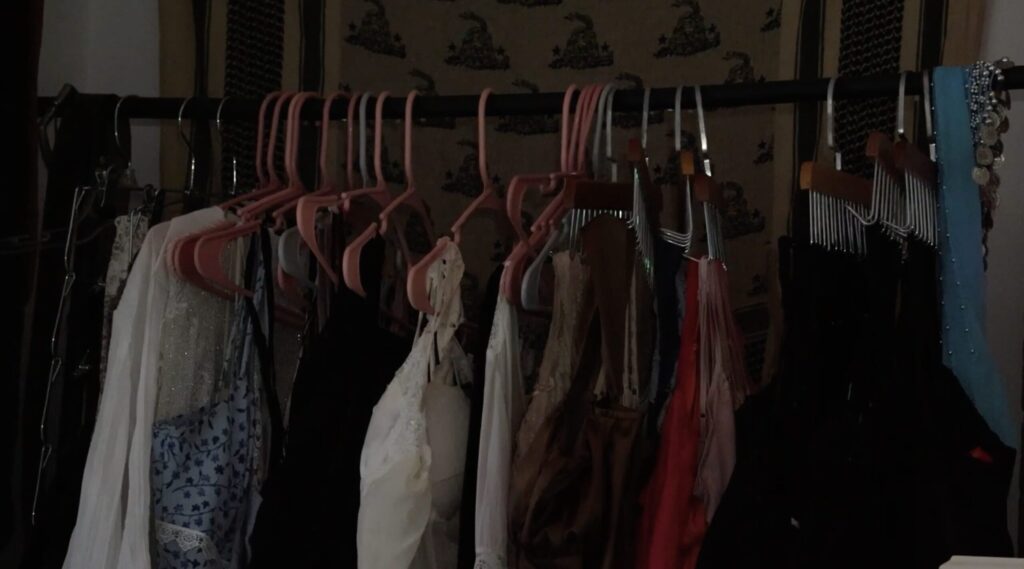
Phillips has amassed sparkly pink halter tops, silk slip dresses, beaded handbags and suede cowboy boots, all of which she sourced for her vintage clothing business, Finders Keepers. She sells hundreds of secondhand pieces at markets across North Carolina, the Durham Vintage Collective storefront in downtown Durham and her recently launched online shop.
Businesses like Finders Keepers are popping up across the state — and country — as young adults increasingly choose secondhand clothing over buying new apparel. More than 60% of Gen Z consumers shopped secondhand in 2025, according to an annual report from the online reselling platform ThredUp. The report found the global secondhand market to be growing twice as fast as the overall apparel market.
Instead of spending hours scouring thrift stores for one good find, many young adults buy from small businesses, where people like Phillips have already done the hard work of hunting down high-quality pieces. Vintage markets pop up nearly every week across North Carolina cities like Charlotte and Durham. Larger events like the NC Vintage Bazaar in Raleigh bring more than 65,000 attendees to shop from hundreds of vendors, and digital marketplaces such as Depop and Vinted continue to gain momentum among young consumers.
UNC senior Aisha Moreau-Silva said she bought more than half of her current wardrobe secondhand. She purchases clothing primarily from sellers at pop-up vintage markets, and while the smaller businesses aren’t necessarily cheaper than store prices, she still prefers their unique pieces to those in the malls.
“I occasionally buy from Depop or Poshmark, but I do most of my thrifting in person because I like to see how it’ll feel,” she said.
What makes something ‘vintage’?
“Vintage” is a buzzword among secondhand resellers and consumers, but the term’s usage fluctuates. Vogue defines vintage clothing as items that are at least 20 years old.
Finders Keepers features items from the ’50s to the early 2000s. Phillips describes her curation style as “Carrie Bradshaw meets disco cowgirl”: on her online shop, customers can browse through pieces including a sparkly Betsey Johnson leopard-print trench coat, hot pink sequin tank top from the ’70s and Versace technicolor miniskirt from the ’90s. She’s heavily inspired by ’90s and 2000s “it-girls” like Cher and Raven-Symoné, as well as iconic characters like Lizzie McGuire and Hannah Montana (“i’m riley & ur watching disney channel,” the Finders Keepers Instagram bio reads).
“I thought I would work in galleries full time until I started doing my business,” Phillips said. “Then I was like, wait, this is kind of scratching the same itch as curating an art show has scratched for me in the past.”
Durham resident Leah Stuebe, the co-owner of Flying Apple Vintage, lists more than 2,000 vintage items on her online shop — including a ’40s wool army jacket, ’70s mod minidress and ’90s satin evening gown — and sells at vintage stores across the Triangle. Her prices vary from $18 to more than $400, depending on quality, brand and decade.
“We want our customers to feel like buying vintage can be as easy as buying from a fast fashion retailer,” Stuebe said.
Building a business:
Vintage resellers are often criticized on social media for “hijacking” thrift stores, with some users accusing the sellers of snatching high-quality garments away from people in need and upselling them for profit.
UNC senior Sarah Younan, who has sold more than 150 pieces on the reselling platform Depop, sells pieces she thrifted for herself but no longer fit or match her personal style.
“When I did go to the thrift store to buy stuff to sell it on Depop, I would try to think about what people would want to buy on Depop, if that makes sense. But honestly, a lot of the stuff I thrifted to sell on Depop actually didn’t end up selling,” she explained.
When picking pieces, Younan is drawn to “anything eclectic”: beaded embellishments, intricate embroidery, grungy details. Though she no longer posts consistently on Depop, she would aim to keep her prices under $30, knowing consumers on the platform often send lower offers before purchasing items.
Phillips said she also began building her inventory through thrifting. But as Finders Keepers has grown, she now sources with wholesalers — most of Finders Keepers’s inventory comes from European suppliers, according to the businesses’ website — or through private buys.
“I’ve established some really strong relationships in the area, so people kind of know to come to me when they have a lot of vintage or clothing that they want to get rid of,” she said.
Maintaining a successful vintage business requires more time and effort than just picking a piece, snapping a picture and listing it online. Phillips works full time as the director of digital strategy at Duke University’s Trinity College of Arts & Sciences, so she dedicates her evenings to building Finders Keepers. She starts by making necessary repairs and cleaning every garment beforehand, excluding fragile materials like silk or leather that require more professional handling. Then, she’ll research and price up to 100 items a night.
“I’m using my tagging gun, pricing every item individually, researching brands, textiles, manufacturers, origins, to make sure I actually know everything I can about the item,” she said.
Stuebe has a similar approach when sourcing for Flying Apple Vintage: She gathers pieces from individuals and recycling facilities. Her favorite parts of the business include bringing items back to life, styling pieces and, of course, “the thrill of the hunt.” She loves going from being uncertain about a piece to seeing the vision after styling, and she hopes her work inspires others to think creatively in their own fashion choices.
Newer isn’t always better:
In today’s online-shopping-fueled economy, vintage fashion is increasingly accessible. Even when someone stumbles upon a perfect piece in a store, Stuebe said that person can easily search online for similar items from resellers.
“Fashion repeats itself too, so there are absolutely lots of secondhand choices just waiting to be snatched up,” she said.
For Phillips, the biggest pull for vintage clothing is its quality. Finders Keepers prides itself in encouraging a deliberate approach to shopping instead of rapidly purchasing clothing that falls apart or gets tossed out after a season. Phillips believes people are more attracted to things designed to last over trendy low-quality brands.
The Environmental Protection Agency found more than 65% of textiles generated in 2018 ended up in landfills that same year. Popular fast fashion brands such as Zara, H&M and SHEIN mass-produce trendy pieces to sell at low prices, sacrificing quality — and safe working conditions — for profit.
Younan and Moreau-Silva both agreed that buying newer apparel often involves spending more money on lower-quality pieces. Plus, the college students love to shape their personal styles through unique pieces.
“To the degree which I thrift, it is still giving consumerism,” Younan said. “But it does make me feel better knowing that I’m not investing a lot of money into modern companies, and I’m more so investing money into brands and thrift stores that I know will get back to my local community.”