
By Corrie Kelleigh
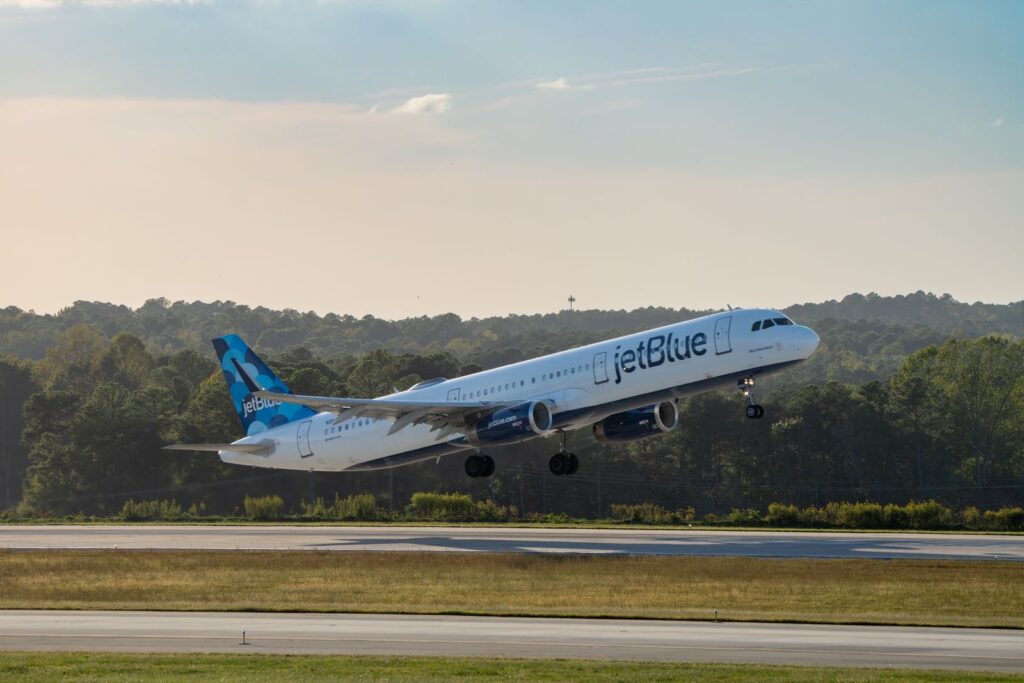
For most people, airports are simply a means to an end: they are the home of oversized suitcases, long layovers and the eager anticipation of the destination ahead.
But for a group of nearly 6,000 people, the Raleigh-Durham International Airport has become a place to gather to share their love of plane spotting.
“It’s cool to be able to bond over something that most people take for granted in their everyday lives,” said Nolan Williamson, a 16-year-old high school student and member of the Plane Spotting RDU club.
RDU may not rival the nation’s largest airports, but it has two features that attract people from across the state: the RDU Observation Park and the top floor of the Central Parking Garage. The park is minimalistic in nature, but its elevated observation platform offers sweeping views of nearly 10,000 feet of runway, while speakers broadcast real-time communication between pilots and the control tower. Spotting from the Central Parking Garage requires written approval from Airport Operations, but offers a unique perspective for spotters.
“Observation Park is a popular location for watching the variety of aircraft from around the world that fly through RDU,” said Stephanie Hawco, director of external communications at RDU. “The thriving group of families, photographers and aviation enthusiasts who enjoy plane spotting at RDU are part of our airport community.”
On any given day, the viewing area fills with a mix of seasoned plane spotters and casual visitors. Kids run freely on the playground beside the observation deck. Spotters with specialized cameras stand alert, their flight-tracking apps open and ready. Others simply watch the constant movement of the busy airport.
“It’s a great community. Everybody’s so, so, so loving and welcoming to anybody. Even if you don’t know what a plane is, they’re still going to be welcoming,” Williamson said.
The Art of the Spot
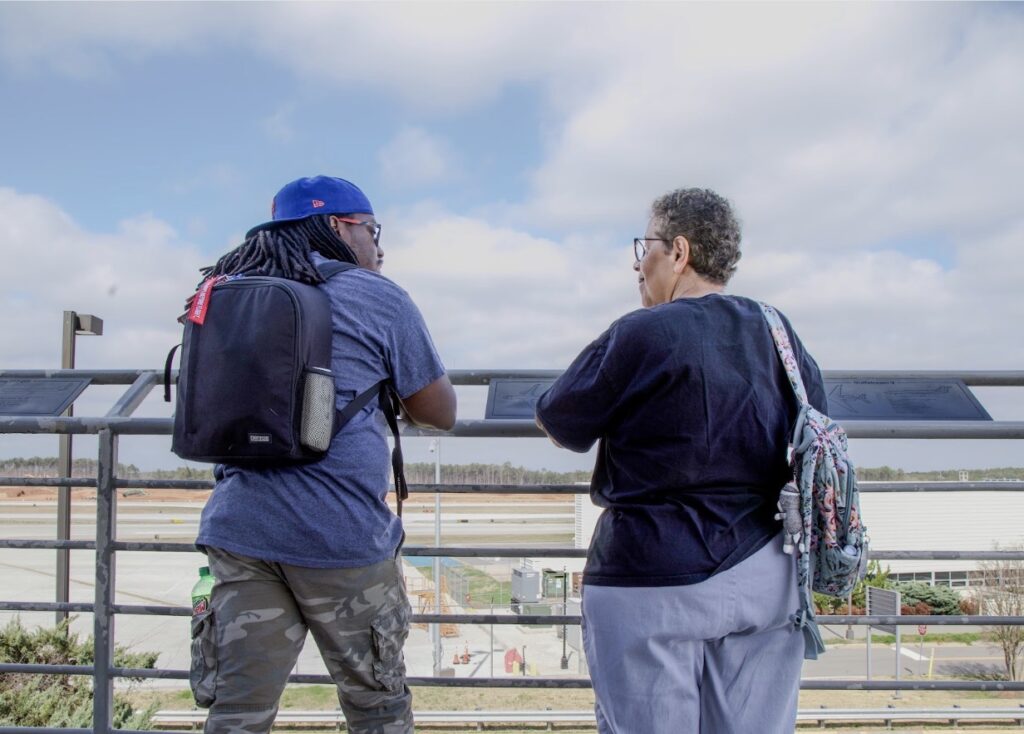
Plane spotting is the hobby of watching and identifying aircraft, with enthusiasts gathering near airports to photograph arrivals and departures and track flights from around the world.
But for many spotters, the experience goes far beyond simply standing at the fence. Many track aircraft through specialized apps that alert them when rare or unusual planes are scheduled to arrive.
“I have an app called JetTip,” said Laura Theobald, who has been plane spotting for over 46 years. “You can log in to any airport and it will tell you what special deliveries are coming and if there are any diversions.”
Sometimes those alerts lead to rare sightings.
“When Manchester City came to Chapel Hill, they flew in on a chartered 747,” Williamson said. “A lot of people know it as the Queen from Boeing.”
The group tries to keep the hobby separate from politics, but the occasional presidential visit still draws attention.
“The coolest plane that I’ve seen here at Raleigh that I can remember probably was Air Force One,” club member Stephen Riley said. “It was when Joe Biden was still doing his campaign runs.”
An Unexpected Community
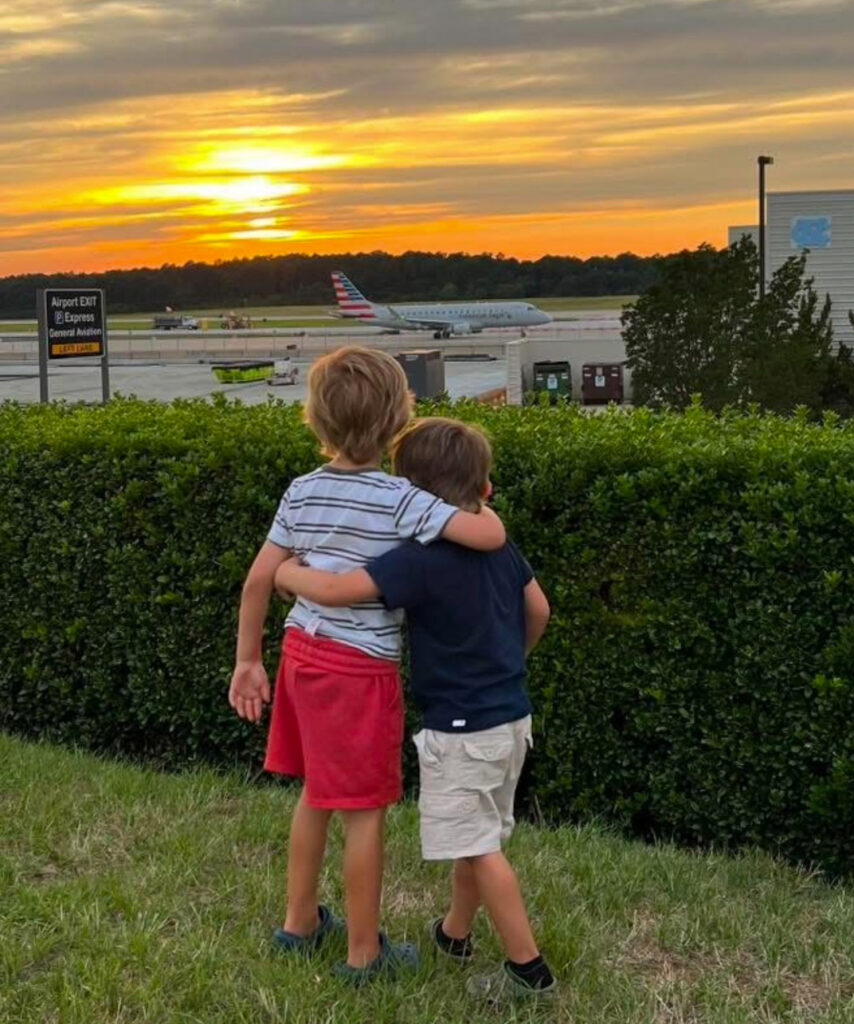
“I started coming out here probably when I was 9 years old,” Riley said.
His fascination didn’t end there. After years of visiting the RDU Observation Park, Riley realized that the introduction of social media could introduce him to a vast network of other plane spotting enthusiasts.
“Eventually, I found a Facebook group called Plane Spotting of the Carolinas,” he said.
Plane Spotting of the Carolinas spans across both North and South Carolina, instead of specifically targeting one airport. The group has 2,900 followers and shares notifications of special events, photographs and a general love of plane spotting.
From there, Riley found Plane Spotting RDU – another Facebook group to foster his beloved hobby. While the tight-knit community feels niche and welcoming, it includes a surprisingly large group of 5,200 fans.
We’ve really become really good friends,” said Christopher Pippen, a 44-year-old director of educational technology at the Eshelman School of Pharmacy at the University of North Carolina at Chapel Hill.
Pippen’s love of planes flies through the family bloodline. Both his father and grandfather were pilots, instilling his appreciation for aviation at an early age.
But planes aren’t the only thing keeping Pippen around. It’s the group that, thanks to their shared hobby, has grown so close they could consider themselves family.
“The community in general is just extremely friendly, extremely open. We welcome anyone that has any sort of interest,” said David Jerrido, a 28-year-old transportation consultant from Durham.
Spotter Goes Airborne
While most plane spotters prefer to stay near the ground, sometimes just watching planes isn’t enough. For Wade Sharp, a sophomore public policy major at UNC-Chapel Hill, his dream career doesn’t lie in Washington – it lives in the air.
“I’d always been interested in aviation since I was a little kid,” said the 19-year-old licensed pilot.
At age 14, Sharp took a discovery flight to see what flying felt like. It was a free, one-hour introductory flight where Sharp was able to fly a plane with no experience required.
He had always been fascinated by planes, but this took his interest to another level.
He worked relentlessly to earn his pilot’s license, a process that can seem out of reach for many aspiring pilots. On average, a private pilot license costs around $15,000 and requires at least 40 hours of flight time, in addition to ground school and extensive self-study.
Growing up in Asheville, Sharp worked at Western Carolina University’s aviation school to help cover his training costs and earned four scholarships to support the rest.
The effort paid off.
“I got my license on my 17th birthday,” Sharp said.
The expenses didn’t end there. At 18, Sharp purchased his own aircraft – a 1995 Vans RV-6 two-seater – for just under $90,000.
“I found the plane in Portland, Oregon,” Sharp said.
He flew out to Oregon on a commercial airline, but was able to fly his own plane all the way back to his home in Asheville.
Now Sharp works as a private flight instructor, teaching others the same skills he once learned. As he builds flight hours, he hopes to one day become a commercial airline pilot. At 19, he is only 300 hours short of the 1,500 required.
But flying for him isn’t all work.
Sharp has taken several memorable trips, including a flight down the Hudson River in New York and another over Niagara Falls.
“My favorite part is just exploring new places with my friends,” Sharp said.
Raleigh-Durham International Airport
Plane spotting communities stretch across North Carolina, from Wilmington to Charlotte and nearly anywhere planes take off and land.
For Theobald, a Wilmington resident, no airport is too far to visit. She often makes the drive to Washington, D.C., to watch planes at Dulles International Airport because of the unique experience it offers spotters.
“If the wind is blowing in the right direction, the planes will fly right over your head,” Theobald said. “They’re like 400 feet above you because the landing lights are right there.”
While Raleigh-Durham International Airport doesn’t offer the same close-up viewing experience, its constant activity still makes it a popular destination for spotters. RDU served more than 15.6 million travelers in 2025, making it the second-largest airport in North Carolina behind Charlotte Douglas International Airport. On an average day, roughly 360 planes arrive and depart, connecting the Triangle to destinations around the country and the world.
In 2025, RDU’s annual economic impact is estimated at $24.1 billion, supporting nearly 140,000 jobs, producing $1.3 billion in tax revenue and generating $9.8 billion in personal income across central and eastern North Carolina.
Just two years earlier, a 2023 report from the N.C. Department of Transportation’s Division of Aviation placed the airport’s economic impact at more than $17 billion — meaning RDU’s footprint has grown roughly 42% in that time. Much of that impact extends beyond the terminals themselves, supporting rental car agencies, restaurants, hotels and security services that rely on a steady stream of travelers.
But airports don’t just shape economies. They shape environments — something both RDU and plane spotters are passionate about.
Airports are among the most energy-intensive infrastructure in a region, producing emissions from jet engines and ground vehicles that can affect nearby communities. Research has also linked long-term aircraft noise exposure to health risks.
RDU officials say they are working to reduce those impacts. The airport has invested more than $19 million in sustainability initiatives and plans improvements such as solar-covered walkways, electric shuttle buses and stormwater-management systems as part of its upcoming terminal expansion.
As the pilot of a small personal craft, Sharp said he is conscious of his environmental footprint but that the impact of flying isn’t as much as some might expect it to be.
“It doesn’t burn a lot of gas,” Sharp said. “It doesn’t burn much more gas than a car.”
Van’s Aircraft estimates that Sharp’s plane model burns about 7.2 gallons of fuel per hour. In a typical month, he spends around $400 on fuel, flying an average of three times per week.
For the plane spotters gathered at the observation deck, debates about economic growth and environmental impact often fade into the background. Their attention is fixed on the sky.
Looking upward and outward
Every arrival brings something new – a rare aircraft, a familiar airline or a connection to somewhere far beyond the Triangle. For Williamson, one moment stands out in particular.
“My whole family is from Germany, and Lufthansa didn’t used to fly into RDU until a few years ago,” Williamson said. “Two years ago they had an inaugural flight here, and everyone came here for the inaugural flight and we had a little party for it. It’s great to see an airline from my home country flying in.”
For most travelers passing through RDU, the planes overhead are simply transportation – a way to get somewhere else.
For the spotters leaning against the railing at Observation Park, they’re something more.
Each aircraft carries a story, and for the small community gathered beneath the flight path, the next one is always worth waiting for.