By Emily Brietz
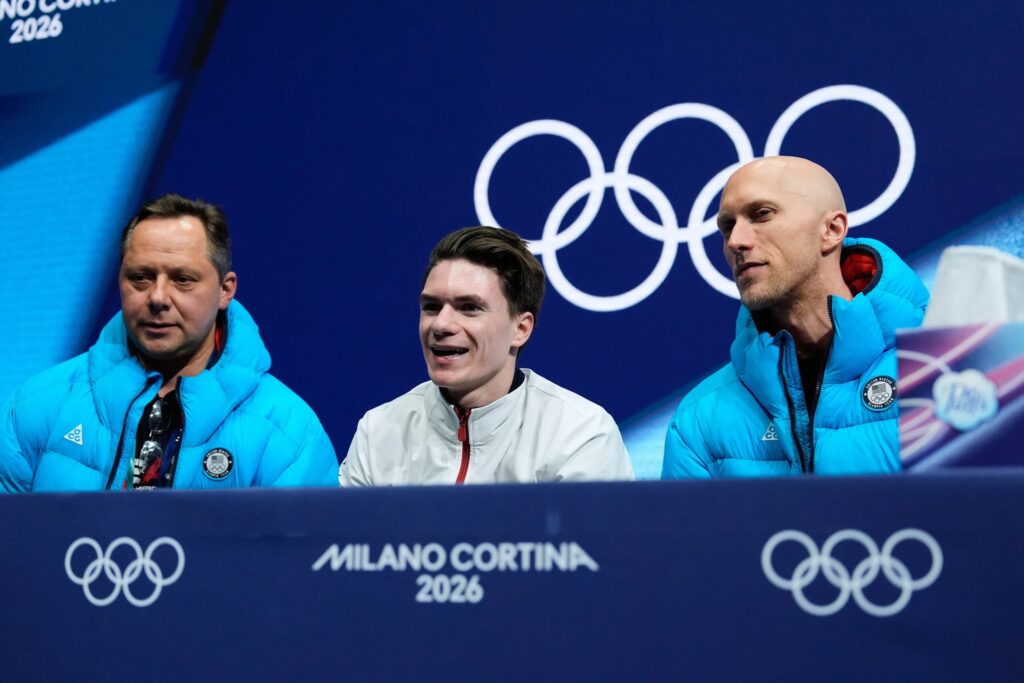
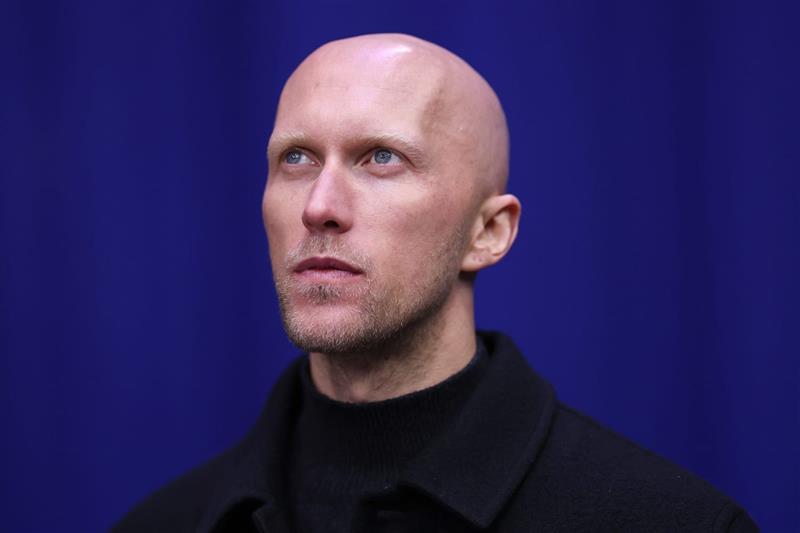
As viewers tune in to Olympic figure skating, they might notice a certain slender, stoic man repeatedly showing up in the “kiss and cry” area.
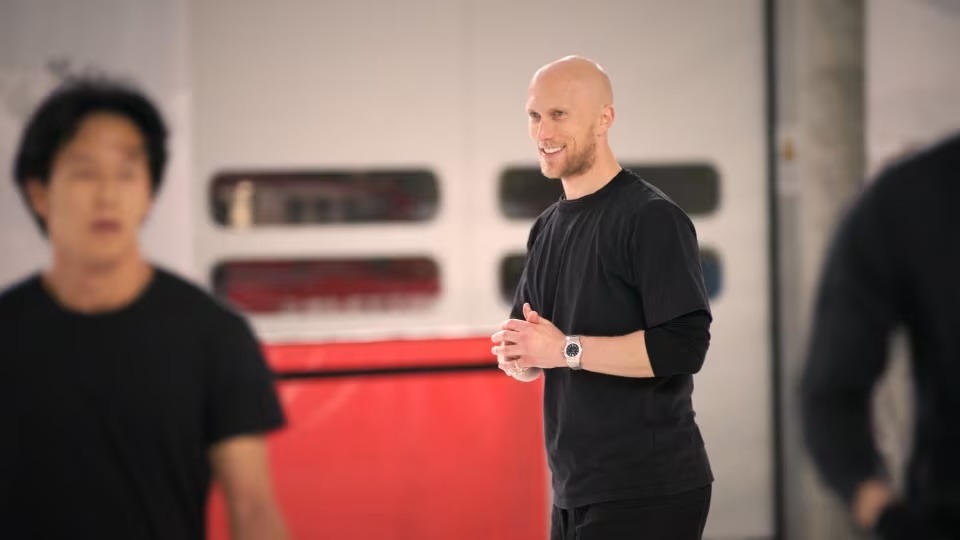
Benoît Richaud is a French figure skating coach for 16 skaters representing 13 nationalities and a choreographer of 27 routines at the Games. He coaches Maxim Naumov, a U.S. men’s figure skater, and choreographs for U.S. ice dance pair Emilea Zingas and Vadym Kolesnik.
“When people asked me how many programs I choreographed and I realized it was 27, I was like, ‘Oh, that’s actually quite a lot,’” he said.
Richaud said he’s glad to work with many different national teams because when they take to the ice, they’re not really competitors—figure skating is a community.
At the Olympics, Richaud has gone viral on social media for repeatedly appearing in the kiss and cry area while wearing jackets from different countries.
Richaud has strayed from his usual simple, all-black attire for the Games. Though it’s not an obligation, he said he feels he should wear the colors of the nations he represents.
“I do it here as a respect for my skater, for their country, for their federation. The Olympic Games—we represent much more than us. We represent the whole country, and we feel it.”
With so many routines to choreograph, one might think his creative well would run dry. Yet, he said choreographing comes easily because every skater inspires him differently.
“I think that’s why I’m able to do different choreography—because it’s not just about me. Actually, I’m a little part in the creative process and it’s very much based on what I see inside them.”
Richaud said he does not draw inspiration from past figure skating routines, but instead looks to paintings, movies and books that move him emotionally. Ever since he was a child, he has noticed the beautiful intricacies of the world around him.
“I could say that getting older, I got more and more attracted by what God gave us for free. What is around us, natural, like watching the sea or a beautiful forest, green grass, animals, anything.”
Once it comes time to put the choreography on the ice, Richaud has little time to spare and a tight schedule to work with.
In the summer he hosts a “summer camp” to bring his skaters together in one place. During the season, they will meet at competitions and schedule private sessions lasting two to four weeks. Otherwise, technology is their primary form of communication and coaching.
He said this format of coaching is possible only for skaters at this high level, who are capable of being independent.
“They don’t need 24-hour correction—we have a plan, we follow a plan, and then we work from that plan and we adjust,” Richaud said.
In 2024, Richaud won the International Skating Union’s Best Figure Skating Choreographer Award after being nominated for many years. Though he was a well-known choreographer before, the credibility led to a flood of clientele.
“It kind of makes you even more peaceful because you are working nonstop and figure skating, like I always said, it’s my life. I do everything for that,” he said. “I have no way to express how much I love figure skating. And to see that it’s recognized, it’s very nice.”
Richaud is at his third Olympics as a choreographer and coach. He said he knew early on that he would make it to the world’s biggest athletics stage.
“When I started to work, I could feel that I had this little voice deep inside me, who said to me, what I’m doing now will happen,” Richaud said. “This voice is still very much present, telling me to continue and do big things.”