
Photos courtesy of Henry Tanner
The package showed up months after Christmas, long after Henry Tanner stopped expecting it. Inside was a backpack — one he’d asked for when he was just another college student dreaming of adventure. But by the time it arrived, adventure was the last thing on his mind.
His doctor had already told him he might never walk again. His left side, once strong, was now numb, a constant reminder of the stroke that nearly took everything from him. The future he imagined, one filled with movement, independence, and possibility, felt far away.
And yet, here it was. The backpack. A symbol of the life he thought he’d lost, now sitting in front of him as if daring him to pick it up.
✝
Tanner grew up in Raleigh, North Carolina, and was the kind of guy who never had any trouble making friends. In high school, he was social, outgoing, and maybe a little wild — always up for a good time, always surrounded by people.
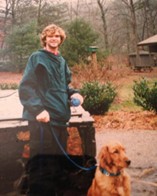
“For the first 20 years of my life, being cool was my religion,” Tanner said.
But beneath the fun, he lacked a clear sense of direction. When he started at the College of Charleston in 1992, the same attitude followed him. He partied, skipped classes, and coasted through his freshman year without much thought for the future.
Looking back, he’s honest about why he wanted to go to college: “Good-looking girls and a lot of parties.”
Tanner barely passed his classes freshman year. His father, Jim, knew his son was capable of more and pushed him to make a change. He encouraged Tanner to sign up for an Outward Bound trip in Montana, advertised as an “outdoor education program.”
For weeks, he camped out in the rugged wilderness with a small group, living off the land, navigating the terrain, and facing challenges that tested both his physical endurance and mental strength.
“I really had a life-changing experience,” Tanner said, reminiscing. “It made me a whole lot more focused.”
Tanner returned to school in the fall and started exercising, taking his classes seriously, and had more drive. When his parents asked him what he wanted for Christmas that year, he had one simple request: a backpack.
Inspired by his journey in Montana, Tanner wanted something that signaled he was ready for whatever came next. The backpack felt like a beginning.
His parents ordered it, hoping it would arrive before Christmas, but it was backordered.
December 25, 1993: no backpack.
January 1994: no backpack.
February 1994: still no backpack.
Tanner assumed his parents never ordered it, or that it had gotten lost in the mail. It slowly became a forgotten thought in Tanner’s mind.
But then, on March 3, 1994, everything changed.
✝
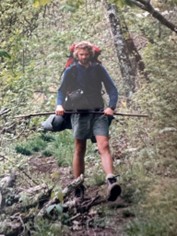
The first step was the hardest. And it didn’t take long for the Appalachian Trail to test him. The first ten days were nothing but cold temperatures and constant rain showers. He averaged five to six miles a day in the beginning, struggling to keep moving forward. To manage the physical toll of the trail, Tanner carried around a wooden hiking pole to support his left side as he navigated the rugged terrain. And by the summer, he had worked his way up to 14 miles a day.
Unlike fellow hikers who set out with the goal of finishing all 2,200 miles, Tanner wasn’t even thinking about the next month.
“My goal was to do one week,” he said. “And after that, I set another goal. Then another.”
His left leg dragged with every step, the top of his left boot scraping against the ground so much that he had to replace his shoelaces every 200 miles.
And yet, he wouldn’t stop.
✝
At the six-week mark in Hot Springs, North Carolina, 280 miles in, Tanner met John Albrecht, a fellow hiker who would soon become one of his closest companions on the trail. They ended up hiking nearly 1,000 miles together.
Albrecht remembers the first time he met Tanner.
“He never complained,” Albrecht recalled. “The trail goes over every pile of rocks. And he’d fall, and then he’d keep going. It was amazing. Amazing guy.”
The trail knocked him down again and again, but every time, he got back up. Step by step, fall after fall, mile after mile. He kept walking. Every so often, he would reach a road crossing or a new town where someone would be waiting: Sally, his girlfriend.
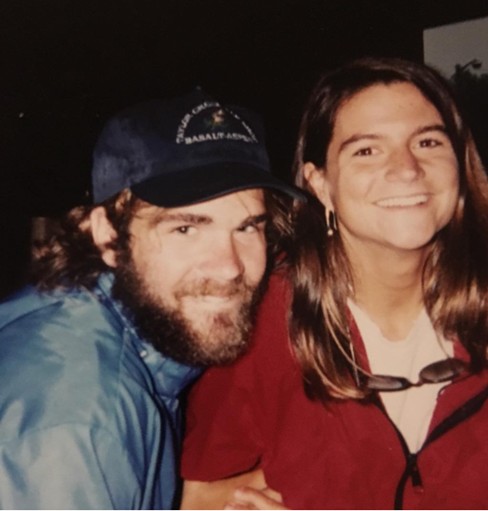
Tanner would call her whenever he came across a payphone in towns where he stopped to restock supplies, coordinating a spot to meet up. Sally would drive hours and hours, trusting that when she arrived at an agreed-upon spot, he would be there. There were no calls to confirm, no text messages to check in. Just faith.
“There was so much trust,” she said. “If I’m gonna get on the road and drive six hours, he’s gonna be there. It was a lot of trust and patience.”
Sally wasn’t just an occasional visitor on Tanner’s journey; she became a part of it. Whenever she could, she would hike with him for days at a time, the trail testing them in different ways — him physically, her in commitment.
“I felt like that really strengthened our relationship,” Tanner said.
✝
But there was a moment of genuine fear, moments when the journey became almost unbearable.
Tanner came close to quitting. Near the very end, in Maine, he drank some tainted water and contracted giardia, an intestinal infection that turns every bathroom break into a crisis.
“I literally woke up and got so sick, looked for a map, tried to figure out what to do,” he recalled. “My only option was to walk 10 miles, sick as anything, to a tiny little town in Maine.”
He called his mom, ready to give up.
“I was like, ‘I’m done, please come and get me,’” he said.
But she didn’t.
“You know what?” she told him. “Only 100 miles left. You got this. Tough it out. You’ll regret it for the rest of your life if you don’t.”
His girlfriend Sally also recalled exactly how she felt when she heard how sick he was.
“That may have been the hardest part,” she admitted. “That was probably the scariest. I remember thinking, ‘This is not good. He might die out there.’”
Looking back, Tanner knew if he was anywhere else, anywhere further south, his mom probably would have come. But he was so close to finishing, she wouldn’t let him back down now.
✝
On the trail, no one goes by their real names. Instead, they earn new ones, nicknames connected to the journey itself.
Tanner’s trail name, Screaming Coyote, started with his mom. The summer before he began hiking, she traveled to New Mexico and brought her son back a small crystal coyote. She was always somewhat spiritual and felt as though this would be special.
“I started pondering on the nature of a coyote,” Tanner explained. “It reminded me of myself, kind of going out on my own, howling, trying to figure things out. I had a lot built up inside of me.”
It felt right. He was venturing out into the wilderness, doing something wild, something that made him feel alive. But also vulnerable, like a coyote howling into the unknown.
✝

October 1, 1995.
The day Henry Tanner neared the end of the Appalachian Trail carried the weight of the seven months he had spent on it — pain, setbacks, doubt, sickness. It was a moment he often thought about, but could never truly imagine what it would be like.
His mother was always a source of inspiration and strength for Tanner. From the very beginning, she supported him, pushed him to keep going when things seemed impossible.
“Henry, when you finish, I’ll be there,” she’d said. “Wherever you are, I’ll meet you for that last mile.”
As he approached the end, Mount Katahdin emerged ahead. The highest peak in Maine, a daunting challenge after seven grueling months on the trail. It didn’t help that he was still sick, exhausted, and weakened. But he was determined.
His mom was ready to hike the last stretch with him. Kind of.
“She would walk around our neighborhood in Raleigh, trying to get in shape for it,” Tanner said. He then laughed when recalling how she’d told him, “Yeah, I walked around the block twice!”
When his parents finally arrived in Maine, they were ready to finish the journey with Tanner.
But halfway up the mountain, he could tell that they weren’t going to make it. The terrain was steep and unforgiving.
Tanner knew there would be no way they could make it to the top and back down before the sun set, so his parents decided to head back down while he continued to the top. He pushed onward, determined to make it to the summit. Left foot dragging, stomach in shambles.
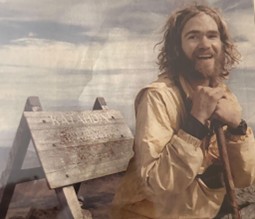
When he finally reached the top, he was surprised to be met with reporters, cameras flashing, capturing one of the greatest moments of his life.
He did it.
He completed the Appalachian Trail.
But something was missing. He didn’t feel complete.
What could possibly be missing?
Moments later, he heard, “HENRY! You made it!”
To his shock, there was his mom — stumbling up the last part of the trail, gasping for breath, calling out for her son.
His mom had summoned the strength to continue hiking, even after Tanner accepted he would be ending the journey solo.
It took a moment to fully process it. His mother, who had always been there, was making the final climb, just like she promised. Tears immediately flooded his eyes. Words caught in his throat. His heart hammered in his chest.
He had hiked for months through unbearable pain, illness, and the struggle to keep moving. Yet he made it. And standing at the summit, he wasn’t alone.
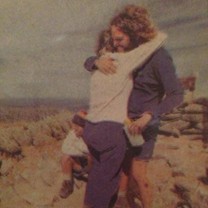
At that moment, Tanner realized just how much of his strength and determination came from her. She never once let him believe that he couldn’t achieve what he wanted to do. Through every tumble, every moment of doubt, she pushed him forward. She believed in him when he barely believed in himself.
“I think Henry’s story is a really big testament to his mom and the kind of person she was,” said Sally, now his wife. “If that was me, I couldn’t be that strong and say, you need to go do that.”
✝
After he finished the trail, Tanner took on a new perspective, growing both spiritually and physically. The Appalachian Trail tested him in ways he never imagined, but he learned deeper lessons along the way that have shaped him into the man he is today.
“I used to hate anything that was slow,” he recalled. “But this experience slowed me down a lot more. I became a lot more reflective, thinking about bigger things than what life has thrown at me.”
That reflection deepened his faith and reshaped his priorities. Tanner, who is now a 52-year-old mortgage banker, has spoken at his church in Raleigh and remains actively involved in his church community. Every Sunday, he attends worship services, finding strength in fellowship and sharing his story with others. His faith has become his purpose, not just as something to lean on during hard times, but as his guiding force in life.
Yet his story hasn’t only shaped him, but also his daughter, Frances. Now in her college years, Frances often reflects on what he went through at her age, how everything was taken away in an instant.
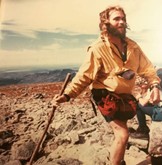
“The way he took it as a challenge instead of just letting it beat him down is really inspiring,” Frances said.
When faced with a moment that could have shattered him, her father refused to let it define his future. He fell, again and again, but never failed to get back up. Even today, with his left side still slow to respond, Tanner doesn’t let it hold him back. Because of his perseverance and faith — and his backpack showing up months late — he didn’t just walk again.
He climbed mountains.
Lola White is a junior from Charlotte, North Carolina, majoring in Journalism with minors in Creative Writing and Composition, Rhetoric, & Digital Literacy. She has experience in writing, editing, social media, and fashion. She writes for The Daily Tar Heel and Coulture Magazine at UNC and hopes to pursue a career in fashion media.